Pest Control Celina TX
Reliable, affordable home pest control in Celina, TX. Protect your property with targeted IPM treatments.


Discovering unexpected pest activity inside your home sparks an immediate surge of stress. Hearing skittering inside a bedroom wall late at night, spotting droppings behind kitchen appliances, or watching a trail of insects cross baseboards forces you to confront an unsettling reality: your living space has been compromised. In North Texas, pests do not linger outdoors when conditions become harsh. Rapid suburban expansion across Collin and Denton counties disrupts native habitats, while hot summer droughts and sudden winter cold snaps drive opportunistic pests directly into climate-controlled homes.
Securing affordable home pest control in Celina, TX is not merely a matter of convenience—it is an urgent operational necessity to protect your family's health and safeguard your home’s structural integrity. When insects or rodents establish an indoor bridgehead, an unchecked biological timeline begins. Left unaddressed, a minor perimeter breach turns into a deeply entrenched colony. If you are noticing suspicious warning signs or dealing with an active pest intrusion, contact the certified field team at Best Home Pest Control directly at 937-809-8658 to schedule an immediate assessment.
Pest Biology & Behavioral Mechanics: Decoding the Infestation
Understanding why pests enter your home requires examining their underlying biology. Household invaders fall into structural, nutritional, or environmental categories:
-
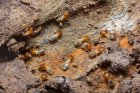
Social Insects (Ants, Termites): Operate within rigid caste structures centered around reproductive queens. Foragers represent only 5% to 10% of a colony's total biomass. Eliminating visible worker ants does nothing to disrupt the egg-laying queen protected deep within wall voids or subterranean nests. Subterranean termites (Reticulitermes) cycle silently through cellulose-rich structural studs, using metabolic moisture and soil contact to protect their soft bodies from desiccation.
-
Commensal Rodents (Roof Rats, House Mice): Mammals adapted specifically to live alongside humans. A single female house mouse produces 6 to 8 litters per year, with sexual maturity reached in roughly 30 days. Their open-rooted incisors grow 4 to 5 inches annually, requiring continuous gnawing on building materials, PVC, and wiring insulation to keep their teeth worn down.
-
Nocturnal Opportunists (Cockroaches, Silverfish): German cockroaches (Blattella germanica) carry egg capsules (oothecae) containing up to 48 nymphs. They mature rapidly and thrive in micro-environments offering high ambient humidity and steady warmth, such as compressor compartments behind refrigerators and dishwashers.
+-------------------------------------------------------------------------+
|                    THE INDOOR STRUCTURAL INVASION PATH                  |
|                                                                         |
|  [Outdoor Habitat] ---> [Structural Perimeter] ---> [Attic / Void]      |
|  Foraging for food/     Exploits weep holes,        Nesting sites near  |
|  escaping drought       gaps, utility conduits      insulation & wiring |
|                                                              |          |
|  [Indoor Infestation] <--------------------------------------+          |
|  Contaminates food, drops pheromone trails, expands colony               |
+-------------------------------------------------------------------------+
The Field Reality: Anatomy of a Colony Breach
During a field inspection on a newly built two-story slab home in Celina, the owners reported occasional black carpenter ants along their second-story baseboards. Over-the-counter surface sprays killed individual foragers, yet activity increased every week.
Our forensic inspection revealed that an exterior condensate drainage line had been installed without a mechanical escutcheon seal, leaving a quarter-inch void around the brick veneer. Outdoor carpenter ants, drawn by moisture from an adjacent irrigation head, followed that conduit straight into the wall cavity. Within 90 days, the workers carved out a secondary satellite nest inside the foam insulation sheath behind the bathroom drywall, establishing an indoor colony out of reach of any retail product.
Root Causes & Environmental Drivers
Cleanliness alone does not dictate pest vulnerability. High-end, pristine homes experience severe infestations when environmental pathways and structural design flaws remain unsealed:
-
Foundation Settling and Brick Weep Holes: North Texas features expansive Blackland Prairie clay soils. Seasonal shifts cause foundations to settle, creating hairline fractures along mortar joints. Furthermore, standard architectural weep holes along brick facades provide unobstructed runways into structural wall cavities unless fitted with specialized, corrosion-resistant weep-hole covers.
-
Unsealed Utility Lines: Air conditioning lines, gas conduits, plumbing pipe sweeps, and electrical feeds create penetration gaps where contractors often use basic expanding foam that rodents easily chew through.
-
Micro-Moisture Reservoirs: Slow leaks around P-traps, uninsulated AC lines dripping inside attic pans, and poor exterior soil grading trap moisture against the foundation, creating essential watering holes for wood-boring insects and roaches.
-
Canopy Bridges and Municipal Refuse: Tree branches touching rooflines act as highways for roof rats and squirrels seeking attic entries. Combined with exterior trash carts stored directly against siding, homes inadvertently provide steady food and accessible entry points.
Critical Warning Signs: When Your Property Is Under Threat
Recognizing the earliest indicators of pest activity allows you to intervene before repair bills mount. Look for these sensory warning signs across your property:
Visual Indicators
-
Droppings: Rodent feces along cabinet corners, behind appliances, or on attic insulation; blunt-ended pellets (roof rats) or small, tapered grains (mice).
-
Mud Tubes: Pencil-thin earthen conduits ascending foundation stems, indicating subterranean termite movement.
-
Frass and Exuviae: Wood shavings ejected from carpenter ant tunnels; translucent shed skins left behind by molting roach nymphs or bed bugs.
-
Rub Marks: Dark, greasy smudges left by rodent fur against baseboards, studs, and sheetrock corners along foraging runs.
Auditory Indicators
-
Scuttling, tapping, or scratching noises overhead in attic spaces during the early evening.
-
Faint rustling inside sheetrock walls, signaling nesting mice or larger insect aggregations.
Olfactory Indicators
-
Distinctly oily, pungent odors associated with established German cockroach harborages.
-
Stale, ammonia-like smells concentrated inside utility closets or pantries, indicating chronic rodent urine deposits.
+--------------------------------------------------------------------------+
|                       THE COST OF DELAYED ACTION                         |
+------------------------------------+-------------------------------------+
| Risk Category                      | Real Structural / Health Consequence|
+------------------------------------+-------------------------------------+
| Chewed Electrical Wiring           | Attic arc faults & electrical fires |
| Contaminated Ductwork & Insulation | Respiratory allergens, airborne urine|
| Structural Framing Excavation      | Termite/carpenter ant floor failure |
| Stored Food Depredation            | Salmonella & E. coli exposure       |
+------------------------------------+-------------------------------------+
Professional Integrated Pest Management (IPM) Workflow
True pest control does not rely on random chemical spraying. Licensed operators use Integrated Pest Management (IPM)—a systematic, ecologically grounded protocol designed to eliminate target pests while minimizing chemical volume inside your living spaces.
   [1. Forensic Inspection]
              |
              v
   [2. Species Identification]
              |
              v
   [3. Targeted Knockdown]
              |
              v
   [4. Physical Exclusion]
              |
              v
   [5. Monitoring & Verification]
Step 1: Forensic Inspection & Harbor Point Mapping
Technicians perform an exhaustive survey of your building envelope, inspecting attic rafters, soffit vents, slab edges, crawlspaces, plumbing chases, and surrounding grounds to trace pest activity to its point of origin.
Step 2: Species Identification & Population Sizing
Treatments must match pest biology. Eradicating pharaoh ants with broad-spectrum pyrethroids causes colony "budding," splitting one nest into several. Pinpointing the exact species determines whether treatments require non-repellent transfer chemistry, hormonal growth regulators, or species-specific baits.
Step 3: Targeted Knockdown & Source Remediation
Using low-toxicity products applied directly to harborages, technicians disrupt reproductive cycles. Treatments target wall voids and cracks rather than open living surfaces, keeping materials away from children and pets.
Step 4: Physical Exclusion & Harbor Reduction
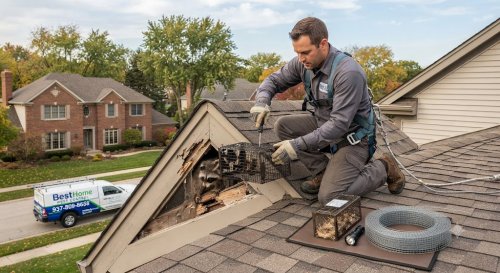
Pest management succeeds only when access routes are permanently blocked. Professionals seal entry points using stainless steel mesh, copper wool, silicone elastomeric sealants, and heavy-duty metal flashing across foundation penetrations and weep holes.
Step 5: Post-Treatment Monitoring & Warranty Verification
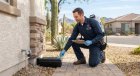
Technicians install tamper-resistant monitoring stations at high-probability transit junctions to assess population reduction over 14 to 30 days, adjusting bait matrices or barrier products as seasonal conditions change.
Advanced Field Arsenal: Commercial-Grade Tools vs. Retail Sprays
Over-the-counter products cannot match the diagnostics, precision chemistry, and mechanical gear used by licensed pest operators:
-
Thermal Imaging and Acoustic Sensors: High-resolution FLIR cameras detect thermal anomalies inside wall cavities, pinpointing dense rodent nests, moisture leaks, and hidden insect colonies without opening drywall. Acoustic probes track the movement of wood-destroying larvae deep within support beams.
-
Micro-Injection Equipment: Flow-regulated delivery tools introduce micro-droplets of non-repellent termiticides and insect growth regulators (IGRs) deep into wall voids, pipe chases, and sill plates.
-
Non-Repellent Transfer Chemistries: Retail sprays act as deterrents, killing only the insects they hit while prompting the rest of the colony to scatter. Professional non-repellent active ingredients (such as fipronil and chlorfenapyr) remain undetectable to pests. Foraging workers pick up the material and pass it throughout the colony via grooming and food sharing, neutralizing the nest at its core.
-
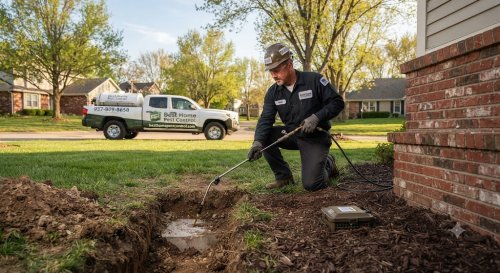
Sub-Slab Injection Rods: Heavy-duty equipment applies protective barriers through expansion joints, concrete porches, and garage aprons directly into subterranean termite zones.
DIY Reality Check: Safe Homeowner Actions vs. Dangerous Mistakes
While proactive property maintenance helps prevent infestations, misapplying home treatments often worsens pest problems.
+------------------------------------+-------------------------------------+
| SAFE DIY PREVENTATIVE MEASURES     | DANGEROUS / INEFFECTIVE MISTAKES    |
+------------------------------------+-------------------------------------+
| Sealing interior gaps with caulk   | Setting off total-release bug bombs |
| Decanting dry goods into glass/PET | Mixing chemicals above label rates  |
| Clearing leaves away from slab     | Handling live trapped rodents       |
| Fixing weeping exterior hose bibs  | Spraying retail bug spray on nests  |
+------------------------------------+-------------------------------------+
The Hazards of Over-the-Counter Foggers
Total-release aerosol bug bombs represent one of the most counterproductive DIY choices. Aerosol droplets fall out of the air onto flat, exposed surfaces—like kitchen counters and floors—without penetrating deep baseboard fissures or wall voids where pests hide. The harsh chemical propellants irritate the insects, causing the colony to scatter deeper into ceilings, adjacent rooms, and hidden voids.
When to Stop DIY and Call a Professional
Stop home treatments immediately and call an exterminator if you observe:
-
Any visual confirmation of termites, mud tubes, or winged swarmers indoors.
-
Scratching sounds coming from within walls or the attic at night.
-
Roaches active during daylight hours.
-
Pest recurrences within 48 hours of applying over-the-counter products.
To connect directly with our licensed technical team, call 937-809-8658.
Financial Breakdown: Cost Factors & Investment Realities
Effective pest control requires upfront diagnostic work and strategic treatments. Pricing for affordable home pest control in Celina, TX depends on several key property factors:
-
Square Footage and Architecture: Larger homes require larger perimeter applications and more monitoring hardware. Complex roof designs, multiple dormers, and stone facades create additional entry points that require specialized ladder work and extensive sealing.
-
Target Pest Biology: Standard crawling pests (crickets, earwigs, common spiders) require routine perimeter maintenance. In contrast, wood-destroying termites, bed bugs, or entrenched roof rats in attics demand specialized materials, exclusion work, or targeted thermal equipment.
-
Severity and Nest Access: Minor seasonal invasions caught early require fewer visits and materials than multi-room infestations nesting within insulated sub-floors or behind brick veneers.
+------------------------------------+-------------------------------------+
| ONE-TIME EMERGENCY REMEDIATION     | RECURRING PREVENTATIVE PROGRAM      |
+------------------------------------+-------------------------------------+
| Higher single-event expense        | Lower, predictable quarterly fees   |
| Reactive response to damage        | Proactive perimeter defense         |
| Solves only immediate infestation  | Continuous coverage & free retargets|
| Zero ongoing warranty protection   | Maintained structural warranty      |
+------------------------------------+-------------------------------------+
Investing in ongoing preventative maintenance eliminates the threat of structural damage, biohazard cleanups, and emergency callouts.
Industry Hard Truths Homeowners Learn Too Late
-
Ultrasonic Pest Repellers Are Ineffective: Peer-reviewed entomological studies confirm that ultrasonic plug-in devices do not deter rodents or insects. Pests quickly adapt to ambient frequencies or simply move along paths outside the device's direct line of sight.
-
Daylight Sightings Indicate High Populations: German cockroaches and rodents are nocturnal by nature. Seeing them in kitchens or living areas during daylight hours typically means primary harborages are overcrowded, forcing weaker individuals to forage in the open.
-
Contact Sprays Miss the Source: Over-the-counter sprays kill only the foraging workers you see, leaving the egg cases, reproductive queens, and hidden colony infrastructure completely intact.
-
Standard Insurance Excludes Pest Damage: Most standard homeowner insurance policies classify termite, insect, and rodent damage as preventable maintenance issues, denying claims for wood repairs, ruined insulation, or chewed wiring.
-
Delayed Maintenance Multiplies Repair Costs: Postponing a basic seasonal perimeter treatment often leads to structural wood damage, attic re-insulation needs, or emergency remediation bills that far exceed the cost of routine preventative service.
Year-Round Seasonal Prevention Checklist
Consistent exterior maintenance stops pests before they cross the building envelope. Apply this checklist throughout the year:
Spring & Summer
-
Trim all tree branches, shrubbery, and ornamental grasses back at least 24 inches from exterior siding, soffits, and gutters.
-
Remove ground-level mulch beds within 12 inches of your concrete foundation, substituting pea gravel to eliminate moist insect bedding.
-
Check all window screens for tears, install tight-fitting sweeps under exterior doors, and clean patio weep drains.
-
Verify that outdoor irrigation heads point away from the house rather than soaking the foundation walls.
Fall & Winter
-
Inspect the perimeter garage door seal; replace cracked or warped weatherstripping where rodents exploit ground-level gaps.
-
Store firewood, scrap lumber, and compost piles at least 20 feet away from the home, elevated off the bare ground.
-
Inspect attic spaces for shifted blown insulation, torn ridge vent screens, or damaged gable vent louvers.
-
Seal gaps around exterior hose bibs, electrical hookups, and gas piping penetrations using copper mesh and non-hardening sealant.
Year-Round Maintenance
-
Clear gutters and downspout collectors of wet leaf litter to eliminate breeding grounds for roaches and mosquitoes.
-
Run a dehumidifier in humid crawlspaces or attics to maintain relative humidity below 50%, discouraging wood-destroying organisms.
-
Keep exterior municipal trash and recycling bins sealed tight, washing them out periodically to remove grease and food residue.
Frequently Asked Questions (FAQs)
Are professional pest control products safe for my pets and children?
Yes. Professional IPM methodologies focus on targeted placements inside wall voids, deep crevices, locked exterior bait stations, and protected harborages out of reach of children and pets. Technicians use EPA-approved products with low mammalian toxicity, and any treated interior areas require only a short drying window before normal use resumes.
How quickly will I see results after a professional treatment?
Knockdown of visible foraging insects generally begins within 24 to 48 hours. For colonial insects (such as ants and termites) and rodents, complete colony elimination typically requires 10 to 21 days. This window allows non-repellent transfer agents and bait products to circulate fully throughout the nest's population.
Why are pests invading my home if it is clean and newly built?
New home construction across North Texas continuously disrupts natural soil habitats. Pests seek moisture, food, and shelter regardless of how tidy a home is. Unsealed weep holes, foundation expansion joints, and attic vents offer easy entry routes, while interior climate control and plumbing lines provide reliable resources year-round.
Will regular pest control get rid of spiders inside my home?
Yes, but effective spider management requires a two-pronged strategy. Because spiders walk with their bodies elevated on long legs, they absorb less pesticide from treated surfaces than crawling insects. Technicians remove exterior webs and egg sacs mechanically while using targeted treatments to eliminate the underlying insect populations that spiders feed on.
Can I treat an active termite infestation myself using store-bought products?
No. DIY termite treatments inevitably fail because retail termiticides are repellent surface sprays. They kill visible swarming termites but cause the subterranean colony to route around the treated spot and attack structural framing elsewhere. Commercial subterranean termite remediation demands specialized sub-slab injection, trenching chemistry, or dedicated bait monitoring networks.
How often should my property receive professional pest control treatments?
For properties in Celina and surrounding North Texas communities, a quarterly preventative maintenance schedule provides optimal, year-round defense. This frequency refreshes protective exterior barriers as intense summer UV rays, heavy rains, and winter cold degrade residual products over time.