Localized Introduction & Architectural Triggers
Orlando’s humid subtropical climate, characterized by 50+ inches of annual rainfall, high relative humidity (averaging 74–80%), and sandy soil over high water tables, creates ideal breeding conditions for subterranean termites (Reticulitermes spp. and Coptotermes formosanus), roof rats (Rattus rattus), American cockroaches (Periplaneta americana), and German cockroaches (Blattella germanica).
   [ Oak Canopies / Palm Fronds ]
                 |
                 v
     [ Barrel Tile / Roof Line ] ──► Roof Rats & Wasps
                 |
                 v
   [ Stucco / Weep Screed Voids ] ──► German & American Cockroaches
                 |
                 v
 [ Slab Expansion Joints & Moisture ] ──► Subterranean Termites
Homes around Pineway Drive and broader Central Florida feature specific construction vulnerabilities that pests exploit during seasonal shifts:
-
Slab-on-Grade Concrete Foundations & Stucco Weep Screeds: The high water table forces subterranean termites to tunnel upward through slab expansion joints, plumbing chases, and cold joints. Stucco-over-frame construction leaves weeping edges near soil level, creating hidden pathways into interior wall cavities.
-
Monsoonal Rain Signals & Hydrostatic Pressure: Summer afternoon deluges saturate topsoil, triggering immediate movement of soil-dwelling pests (Palmetto bugs, carpenter ants, and subterranean termites) into dry interior sub-crevices and crawlspaces.
-
Barrel-Tile Roofs & Mature Canopies: Live oaks and palm fronds overhanging rooflines act as direct bridges for roof rats. Once on the roof, rodents exploit gaps beneath barrel tiles and unsealed soffit vents to nest within blown-in insulation.

3. Seasonal Pest Prevention Framework
Fall/Winter Protocols (Dry Season & Thermal Drop Transition)
-
Exterior Envelope Sealing: Install 1/4-inch hardware cloth or stainless steel mesh behind stucco weep screeds, soffit vents, and roof ridge caps. Seal utility wall penetrations (HVAC line sets, conduit) using polyurethane sealant backed by copper mesh.
-
Roofline and Attic Maintenance: Trim tree branches back 6 to 8 feet from the roof edge to remove rodent access bridges. Inspect blown-in attic insulation for rodent paths, droppings, or grease marks.
-
Wood and Debris Storage: Store firewood, lumber, and yard debris elevated 6 inches above the soil and at least 20 feet away from exterior foundation walls to prevent termite and ant harborage.
Spring/Spring-Swarming Protocols (Rain & Humidity Spike)
-
Vegetation Clearances: Maintain a strict 18–24 inch pea-gravel or stone buffer zone between exterior foliage/mulch and the foundation perimeter to eliminate damp shelter zones.
-
Drainage & Downspout Management: Direct downspout extensions at least 4 to 6 feet away from the concrete slab. Ensure gutter channels stay clear of pine needles and oak debris to avoid fascia rot.
-
Door Sweeps & Screens: Fit exterior entry doors and garage thresholds with industrial neoprene sweeps to eliminate gap heights greater than 1/16 inch.
Year-Round Interior Habits
-
Airtight Food Storage: Store pantry items, grains, and pet food in rigid, gasket-sealed plastic or glass containers.
-
Humidity Threshold Targets: Keep interior relative humidity below 50% using air conditioning units or dedicated dehumidifiers, inhibiting development of silverfish, mold, and cockroach populations.
-
Avoid Repellent Aerosols: Never spray synthetic pyrethroid "bug sprays" on active ant or roach harborage zones. Repellent formulations cause population fracture ("budding"), scattering colony members deeper into drywall cavities.
4. Emergency Dispatch Matrix
| Emergency Scenario | Primary Structural & Health Risks | Immediate Action Required |
| Active Rodents in Living/Prep Zones | Electrical fire risk from chewed wiring, airborne exposure to Hantavirus, Salmonella, and Leptospirosis. | Isolate the room, store exposed food in sealed containers, cover cooking areas, and call 937-809-8658 for trapping and mechanical exclusion. |
| Stinging Insects Inside Wall Voids | Anaphylactic shock hazard; moisture damage, wallboard decay, and honey/larval rot inside sheetrock. | Do not plug the exterior entrance hole (forces insects into interior rooms). Turn off nearby interior lights and schedule immediate professional extraction. |
| Interior Wildlife Encounters (Raccoons/Opossums) | Rabies vector potential, aggressive protection of litters, ectoparasite introduction (fleas, ticks, mites), attic insulation destruction. | Isolate pets and children, seal room doors with towels underneath, do not corner the animal, and contact emergency dispatch. |
| Severe Bed Bug Infestation | Severe allergic dermatitis, secondary skin infections from scratching, sleep disruption, multi-room contamination. | Contain affected items in sealed plastic bags, do not move furniture between rooms, wash bedding on high heat ($140^\circ\text{F}+$ for 30 minutes), and schedule thermal/chemical intervention. |
5. Systematic 5-Step Professional Inspection Workflow
[Step 1: Exterior Perimeter Mapping] ──► [Step 2: Interior Micro-Habitat Analysis]
                                                      |
                                                      v
[Step 5: Targeted Application & Exclusion] ◄── [Step 4: Custom IPM Plan] ◄── [Step 3: Species Staging]
-
Step 1: Exterior Perimeter & Entry Point Mapping
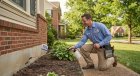
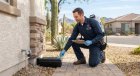
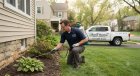
A technician maps the property exterior, examining slab-to-stucco transitions, utility chases, soffit clearances, irrigation coverage, and drainage grading to identify entry points.
-
Step 2: Interior Micro-Habitat & Moisture Analysis
Utilizing FLIR thermal imaging cameras and pinless moisture meters, technicians locate hidden moisture behind drywall, unvented plumbing leaks, and heat signatures from active pest harborage inside wall voids.
-
Step 3: Species Identification & Population Density Staging
Technicians identify exact species (e.g., German vs. Asian cockroach, Formosan vs. Eastern subterranean termite) and rate population levels based on egg capsules (oothecae), fecal specking, cast skins, or structural galleries.
-
Step 4: Custom Integrated Pest Management (IPM) Formulation
A site-specific strategy is created, focusing on structural modifications, non-repellent transfer chemistry, biological insect growth regulators (IGRs), and mechanical trapping rather than broad-spectrum sprays.
-
Step 5: Targeted Application, Exclusion Installation & Follow-Up Monitoring
Exclusion materials (copper mesh, structural sealants, heavy door sweeps) are installed, targeted non-repellent agents are placed in harborages, and digital bait/monitoring stations are set up to evaluate pop-down trends over time.
6. DIY Boundaries vs. Professional Interventions
| Safe DIY Homeowner Tasks | High-Risk / Pro-Only Interventions |
| Setting mechanical snap traps with peanut butter along baseboards. | Soil injection or trenching around slab foundations with termiticides. |
| Sealing interior baseboard gaps under 1/4 inch with silicone caulk. | Wall void dusting or micro-injection near electrical breaker boxes. |
| Clearing leaf clutter, cleaning gutters, and trimming ground foliage. | Eradicating yellowjacket or hornet nests inside wall cavities. |
| Placing airtight storage bins in pantries and fixing minor hose drips. | Whole-home thermal bed bug remediation or structural fumigation. |
4 Immediate Professional Call Triggers
-
Daylight Sightings: Observing nocturnal species (rodents, German roaches) in daylight indicates extreme nest overcrowding and high population density.
-
Wall Scratching or Buzzing: Auditory evidence of scratching, clicking, or active buzzing inside drywall, ceiling voids, or soffits.
-
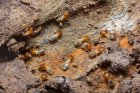
Structural Frass or Mud Tubes: Finding pencil-thick mud tubes climbing slab foundations or pile accumulations of kick-out pellets (termite frass).
-
Health or Allergic Threat: Unexplained night bites, skin rashes, or sudden asthma flare-ups tied to pest excrement, dust, or shed skins.
7. Warning Signs: Sensory Diagnostics & Risks of Delay
Sensory Indicators
-
Auditory: Rapid scampering or scratching behind drywall late at night (roof rats); clicking sounds inside framing timbers caused by soldier termites snapping their mandibles.
-
Visual: Dark grease rub marks along baseboards and drywall corners (rodent oil paths); shed translucent wings near window sills; small pepper-like droppings in cabinet drawers (roaches/mice).
-
Olfactory: Pungent, ammonia-like odors from accumulated rodent urine; musty, sweet scent associated with severe bed bug harborages; oily, stale odors from hidden cockroach aggregations.
Consequences of Delay
[Rodent Tooth Gnawing] ──► Bare Wire Exposure ──► Short Circuits & Structure Fires
[Termite Subterranean Feed] ──► Wood Fiber Loss ──► Load-Bearing Structural Failure
[Pest Excrement Accumulation] ──► Airborne Allergens ──► Severe Respiratory Illness
8. Cost Breakdown & Pricing Variables
Professional service pricing depends on several specific property and infestation variables:
-
Initial Diagnostic & Comprehensive Inspection Fees: Range from $0 (included with service agreements) to $150 for detailed thermal imaging, moisture mapping, and borescope wall inspections.
-
Square Footage & Architectural Access: Larger footprints, multi-story rooflines, restricted attic crawlspaces, or high barrel-tile roofs increase labor time, safety rigging, and material volume required.
-
Remediation Methodology: Spot baiting and exclusion carry different pricing than intensive soil trenching with fipronil, sub-slab pressure injection, or whole-structure thermal remediation.
-
Custom Exclusion Labor & Upgrades: Custom metal flashing work, soffit repairs, mortar restoration, and complete attic insulation restoration are priced according to structural scope and raw material needs.
-
One-Time Emergency vs. Recurring Maintenance: Emergency single visits require higher mobilization and immediate labor costs, whereas quarterly IPM maintenance programs distribute costs across continuous preventative care.
9. Professional Equipment & Diagnostic Arsenal
| Diagnostic Tool / Material | Practical Application & Function |
| FLIR Thermal Cameras | Maps thermal variances inside walls to locate hidden moisture plumes, leaking pipes, and heat signatures from rodent nests or termite colonies. |
| Digital Borescopes | Inspects internal wall cavities, cabinet voids, and pipe chases through small 1/4-inch probe access holes. |
| Pinless Moisture Meters | Detects relative moisture levels inside structural wood and drywall to map subterranean termite and fungal rot risks. |
| Acoustic Listening Devices | Amplifies movement, gnawing, and timber-chewing sounds within structural framing. |
| Non-Repellent Transfer Chemistries | Undetectable actives (e.g., Fipronil, Chlorfenapyr) that pests walk through and transfer throughout the colony via grooming and social contact. |
10. Industry Hard Truths & Insider Facts
-
Total-Release Foggers ("Bug Bombs") Backfire: Over-the-counter foggers release pyrethroid aerosols that do not penetrate deep cracks or crevices. The repellent chemical drives pests deeper into wall voids, behind insulation, and into adjacent rooms, worsening the infestation.
-
Ultrasonic Plug-In Devices Are Ineffective: Controlled entomological testing demonstrates that pests acclimate to sound frequencies within hours. Ultrasonic repellers do not replace physical exclusion and IPM methodologies.
-
Chemical Applications Without Exclusion Fail: Applying sprays without closing physical entry points (gaps, weeping holes, utility chases) provides temporary control. Once the chemical barrier degrades, new pests enter freely.
-
Homeowners Insurance Excludes Pest Damage: Most standard property insurance policies classify insect, termite, and rodent damage as "preventable maintenance," leaving structural repair costs to the homeowner.
11. Comprehensive FAQ Section
How long until complete colony elimination occurs after treatment?
Non-repellent baits and Insect Growth Regulators (IGRs) typically show initial population drops within 48 to 72 hours, with full cockroach or ant colony elimination taking 14 to 21 days. Subterranean termite colony elimination using non-repellent soil treatments or baiting matrix systems usually takes 30 to 90 days.
Are targeted IPM treatments safe for pets and children?
Yes. Modern IPM prioritizes targeted placement in areas inaccessible to children and pets, such as interior wall voids, sealed bait stations, and micro-crevices. Once liquid applications dry completely (typically 1 to 2 hours), treated areas are safe for normal activity.
How do I visually tell the difference between winged termites and swarming ants?
Inspect the waist, antennae, and wing dimensions:
TERMITE:       [Head]=== [Thorax]=== [Abdomen]  (Broad, Straight Waist)
               Antennae: Straight and beaded
               Wings: 4 wings of equal length and shape

CARPENTER ANT: [Head]---(Narrow)---[Abdomen]   (Pinched Waist)
               Antennae: Elbowed / Bent
               Wings: 4 wings, forewings visibly larger than hindwings
How should I prepare my home before a bed bug or cockroach service?
For bed bugs, remove bed linens, wash and dry them on high heat ($140^\circ\text{F}+$ for 30 minutes), clear clutter from floors, and vacuum thoroughly. For cockroaches, clear kitchen counters, empty under-sink cabinets, remove food crumbs behind appliances, and ensure sink areas are dry.
Why do I see an increase in pest activity right after treatment?
This is known as the post-treatment "flushing out" effect. Non-repellent active ingredients, baits, and desiccating dusts disrupt the central nervous system or digestive tract of hidden pests, driving them out of dark harborages in search of water before they die.
Why does standard expanding spray foam fail to stop rodents?
Standard polyurethane expanding spray foam cures into a soft plastic foam matrix. Rats and mice easily chew through polyurethane foam. Effective rodent exclusion requires pairing sealants with copper mesh, steel wool, or heavy-gauge hardware cloth embedded inside the matrix.
How often should Central Florida homes receive pest inspections?
Due to Orlando’s year-round warm climate and lack of a ground freeze, homes should receive a comprehensive wood-destroying organism (WDO) and termite inspection annually. Exterior perimeter preventative IPM maintenance is recommended on a quarterly basis.
What are the main foundation attractants for subterranean termites?
Key attractants include soil elevated above the concrete slab line, leaky hose bibs or irrigation heads wetting foundation walls, wooden mulch in contact with stucco or siding, poor downspout drainage, and cellulose debris buried near the slab.
Schedule Your Orlando Pest Inspection Today
Protect your property from hidden infestations with targeted IPM solutions. Call Best Home Pest Control at 937-809-8658 to schedule a professional evaluation for your home today.