Why Do Ants Keep Appearing in Your Kitchen Even When It Is Clean?
Discover why ants appear in clean kitchens, learn biological triggers, and implement IPM exclusion strategies. Call Best Home Pest Control at 937-809-8658.

Why Do Ants Keep Appearing in Your Kitchen Even When It Is Clean
Finding a steady line of ants marching across a spotlessly cleaned quartz countertop or stainless steel sink is one of the most frustrating experiences for a homeowner. Cleanliness alone does not make a home immune to ant incursions. Ants do not invade kitchens solely for visible food crumbs; they are driven by microscopic water sources, thermal gradients, bio-film in plumbing drains, and chemical pheromone trails that survive standard household surface cleaners.
Understanding the biology of invasive ant species—such as Odorous House Ants (Tapinoma sessile), Argentine Ants (Linepithema humile), and Carpenter Ants (Camponotus spp.)—reveals why routine kitchen sanitation must be combined with structural Integrated Pest Management (IPM) to stop recurring trailing.
Homes across the USA face distinct environmental shifts that force ant colonies indoors regardless of kitchen hygiene. Seasonal weather triggers—including spring heavy rains that saturate outdoor nesting soil, summer drought conditions that dry out natural honeydew sources, and fall freeze-thaw cycles—compel scout ants to seek micro-climates inside residential structures.
Specific architectural features in US homes create invisible highways directly into kitchen zones:
-
Slab Foundations & Expansion Joints: Settling slab foundations develop hairline stress cracks beneath kitchen tile or laminate flooring. Ant colonies nesting under the slab exploit expansion joints to emerge through floor registers and baseboards.
-
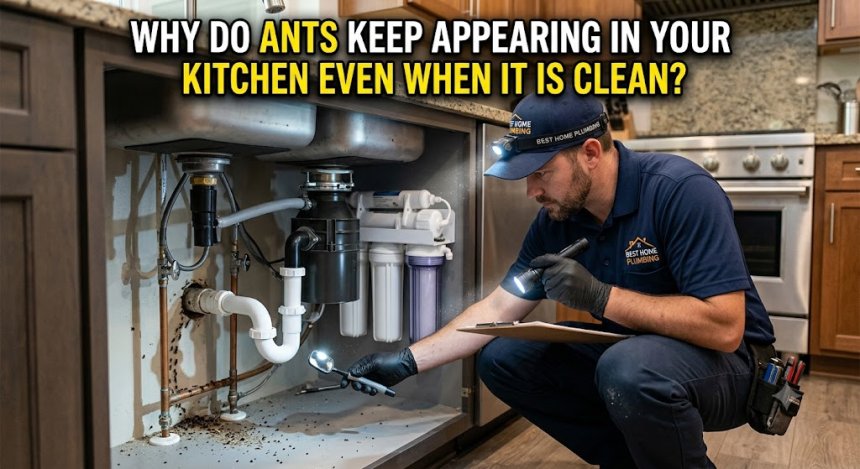
Plumbing Chases & Sink Penetrations: Kitchen sink supply lines and drain pipes pass through wall studs with unsealed gaps. Pervasive condensation on cold water lines provides the continuous moisture ants require for colony survival.
-
Backsplash & Countertop Gaps: Missing or deteriorated silicone caulk along tile backsplashes gives ants direct access from hollow wall voids to prep surfaces.
-
Window Sill Envelopes & Wall Voids: Aging window frame seals and uninsulated header voids create protected harborages where satellite ant colonies thrive near outdoor foliage.
Seasonal Pest Prevention Framework
Controlling ant invasions and secondary structure-invading pests requires a disciplined, year-round preventive protocol rooted in modern IPM principles.
Fall/Winter Protocols
-
Exterior Envelope Sealing: Inspect the perimeter foundation line, siding overlaps, and door thresholds. Fill all structural gaps using rust-proof copper mesh (Stuff-it) and top with exterior-grade polyurethane sealant.
-
Attic & Crawlspace Insulation Checks: Inspect crawlspace subfloors for damp insulation caused by slow plumbing leaks. Ensure vapor barriers cover 100% of exposed soil to reduce structural relative humidity.
-
Firewood & Organic Debris Management: Move firewood piles at least 20 feet away from kitchen exterior walls and elevate them 6 inches off the ground to eliminate overwintering satellite colonies.
-
Weep Hole Protection: Install stainless steel wire mesh inserts in masonry weep holes to preserve foundation ventilation while blocking ant pathways.
Spring/Summer Protocols
-
Vegetation Clearances: Maintain a strict 18–24 inch pea-gravel or stone buffer around the foundation perimeter. Prune tree branches and ornamental shrubs back at least 24 inches from exterior walls and rooflines to sever aerial ant bridges.
-
Drainage & Downspout Management: Direct downspout extensions at least 3–5 feet away from the foundation to prevent soil oversaturation, which forces ground-nesting ants upward into walls.
-
Door Sweeps & Window Screens: Replace worn door sweeps on kitchen exterior and garage doors. Upgrade window screens to fine-mesh framing to deny entry to winged ant reproducers (swarmers).
Year-Round Interior Habits
-
Drain & Pheromone Sanitation: Clean kitchen sink disposal units and overflow drains regularly with enzymatic cleaners to destroy organic bio-film. Wash trailed baseboards with dilute vinegar solution to break down recruitment pheromone paths.
-
Airtight Food Storage Protocols: Store sugar, baking ingredients, cereal, and pet food in airtight glass or heavy-gauge plastic containers with rubber gasket seals.
-
Relative Humidity Management: Maintain basement and crawlspace relative humidity levels below 50% using commercial dehumidifiers to eliminate moisture gradients that draw foraging ants.
-
Avoid Repellent Aerosol Misuse: Never spray over-the-counter pyrethroid aerosol sprays directly on trailing ants. Repellent sprays cause multi-queen ant species (like Odorous House Ants or Argentine Ants) to execute "budding," where the main colony splits into multiple hostile satellite nests throughout wall voids.
Emergency Dispatch Matrix
While ants in a kitchen are frequently a chronic annoyance, certain pest scenarios require immediate professional intervention to safeguard structural integrity and family health.
| Emergency Scenario | Primary Structural & Health Risks | Immediate Action Required |
| Active Rodents in Food Prep or Living Zones | Chewed electrical wiring (fire hazard), contamination of food prep areas with Salmonella, Hantavirus, and Leptospirosis. | Isolate food supplies, block immediate room exits if safely possible, and call Best Home Pest Control at 937-809-8658. |
| Stinging Insects inside Wall Voids or Ceilings | Severe drywall collapse from nest moisture; high risk of systemic allergic reactions or anaphylaxis from interior stings. | Do not seal the exterior entry hole (forces insects into the living space). Keep room clear and contact a professional immediately. |
| Interior Wildlife Encounters (Raccoons, Bats, Squirrels) | Rabies transmission risk, severe airborne fungal exposure from guano/feces (Histoplasmosis), destroyed attic insulation. | Isolate the affected area, keep pets and children away, do not attempt manual capture, and call emergency pest dispatch. |
| Severe Bed Bug Infestation (Daylight Sighting on Furniture) | Widespread dispersal throughout structural framing, chronic sleep deprivation, secondary skin infections from bites. | Do not move mattress/furniture to other rooms or hallways. Contact professionals for heat or targeted non-repellent treatment. |
Systematic 5-Step Professional Inspection Workflow
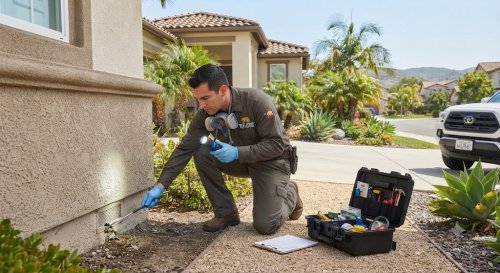
At Best Home Pest Control, our licensed technicians execute a diagnostic workflow designed to locate parent ant colonies, trace subterranean entry points, and eradicate nests at their source.
+-----------------------------------------------------------------------+
| STEP 1: Exterior Perimeter & Entry Point Mapping                      |
| Inspect foundation lines, utility chases, vegetation bridges, & weep. |
+-----------------------------------------------------------------------+
                                   |
                                   v
+-----------------------------------------------------------------------+
| STEP 2: Interior Micro-Habitat & Moisture Analysis                    |
| Scan plumbing voids, backsplash edges, & subfloors with FLIR & meters. |
+-----------------------------------------------------------------------+
                                   |
                                   v
+-----------------------------------------------------------------------+
| STEP 3: Species Identification & Population Density Staging           |
| Identify exact ant species, node count, & evaluate colony structure.  |
+-----------------------------------------------------------------------+
                                   |
                                   v
+-----------------------------------------------------------------------+
| STEP 4: Custom Integrated Pest Management (IPM) Formulation          |
| Select non-repellent transfer agents, bait matrix, & exclusion plan.  |
+-----------------------------------------------------------------------+
                                   |
                                   v
+-----------------------------------------------------------------------+
| STEP 5: Targeted Application, Exclusion & Follow-Up Monitoring       |
| Apply slow-acting chemistry, seal gaps, and monitor colony death.     |
+-----------------------------------------------------------------------+
-
Exterior Perimeter & Entry Point Mapping: We conduct a 360-degree inspection of the building envelope, locating ant trailing lines along foundation ledges, utility penetrations, window frames, and vegetation contact points.
-
Interior Micro-Habitat & Moisture Analysis: Utilizing FLIR thermal imaging cameras and pinless moisture meters, we scan kitchen wall voids, under-sink plumbing enclosures, and appliance motor housings to detect hidden moisture leaks and nesting nodes.
-
Species Identification & Population Density Staging: We examine ant morphology (counting petiole nodes, checking thorax profile and color) to distinguish single-queen species from complex polygyne (multi-queen) super-colonies, determining whether the infestation is an external foraging party or an established wall-void nest.
-
Custom IPM Formulation: We design a multi-tiered treatment protocol combining specialized carbohydrate/protein bait matrices, non-repellent transfer chemistries, and structural exclusion measures.
-
Targeted Application, Exclusion & Follow-Up Monitoring: Technicians inject non-repellent treatments directly into active wall voids, lay slow-acting bait matrices along verified trailing paths, seal structural entry points with polyurethane sealant and copper mesh, and establish follow-up monitoring to confirm total colony elimination.
DIY Boundaries vs. Professional Interventions
Understanding the limits of DIY methods prevents costly mistakes, such as scattering ant colonies deeper into structural framing.
| Safe DIY Homeowner Tasks | High-Risk / Pro-Only Interventions |
| Cleaning counter surfaces with dilute vinegar to disrupt trail odors. | Injecting fast-acting pyrethroid sprays into wall voids containing multi-queen species. |
| Storing dry pantry goods in sealed glass or plastic containers. | Attempting structural carpenter ant nest removal in load-bearing framing. |
| Pruning small garden plants 18 inches away from low foundation walls. | Applying commercial non-repellent transfer chemistries (Fipronil/Chlorfenapyr). |
| Wiping down sink areas nightly to eliminate standing water drops. | Performing complete structural pest exclusion along foundation slab joints. |
4 Critical Trigger Conditions: When to Call a Professional Immediately
-
Daylight Swarming: Observing winged ants (reproducers) inside kitchen windows or light fixtures, which indicates a mature colony nesting directly inside structural timbers or wall voids.
-
Persistent Trailing Despite Cleaning: Ant lines that reform within hours of surface cleaning, signaling an active pheromone trail originating from inside wall cavities.
-
Frass or Sawdust Accumulation: Finding fine, wood-shaving piles (frass) mixed with insect parts beneath kitchen cabinets or baseboards—a key indicator of Carpenter Ant excavation.
-
Kitchen Pests Co-occurring with Wood Moisture: Finding ants around damp baseboards or soft drywall under kitchen sinks, pointing to ongoing wood rot and structural compromise.
Warning Signs: Sensory Diagnostics & Risks of Delay
Ant infestations provide distinct sensory indicators that reveal the extent of colony establishment long before major damage occurs.
                      SENSORY DIAGNOSTICS
                               |
       +-----------------------+-----------------------+
       |                       |                       |
       v                       v