Ant Baiting & Removal Guide | Best Home Pest Control
Ant baits attracting more ants? Learn the biological reason for initial ant surges, non-repellent transfer chemistry, and IPM controls. Call 937-809-8658.

Ant Baiting & Removal Guide | Best Home Pest Control
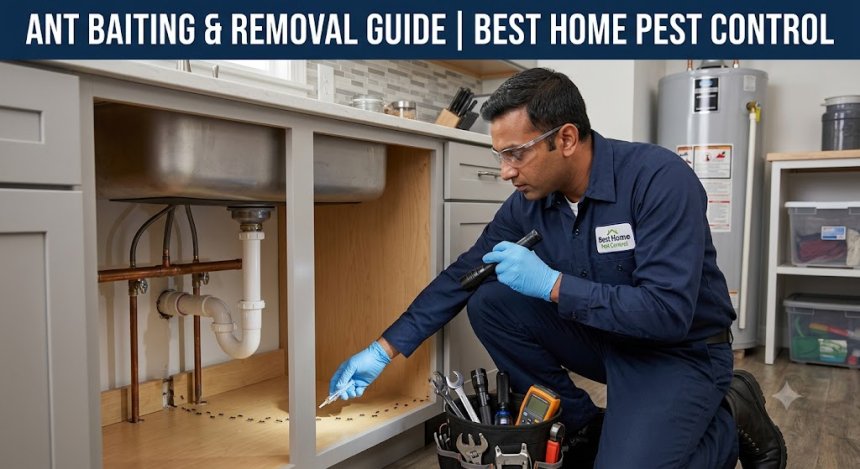
Observing an immediate increase in ant traffic after deploying bait matrixes is not a sign of treatment failure; it is the fundamental biological mechanism required for total colony elimination. Social Hymenoptera—including carpenter ants (Camponotus spp.), pavement ants (Tetramorium caespitum), and odorous house ants (Tapinoma sessile)—rely on systematic foraging networks and recruitment pheromones. When scout ants discover a high-value carbohydrate or protein matrix, they deposit recruitment pheromone trails back to the nest, recruiting dozens or hundreds of worker ants to harvest the bait.
+-----------------------------------------------------------------------------------+
|                        ANT RECRUITMENT & TROPHALLAXIS PIPELINE                    |
+-----------------------------------------------------------------------------------+
|  [ Scout Ant Finds Bait Matrix ] ---> Lays Recruitment Pheromone Trail            |
|                                                                                   |
|  [ Mass Worker Recruitment ]    ---> Temporary Visual Surge at Bait Site          |
|                                                                                   |
|  [ Trophallaxis (Food Sharing) ] ---> Non-Repellent Active Ingredient Spreads      |
|                                         to Larvae & Queen for Colony Collapse     |
+-----------------------------------------------------------------------------------+
Architectural & Microclimate Ingress Factors
-
Subfloor & Slab Penetrability: In slab-on-grade homes, ants follow plumbing expansion gaps and cold joints under kitchen and bathroom tiles. In homes with fieldstone foundations or unvented crawlspaces, damp wooden sill plates provide primary satellite nesting sites.
-
Moisture Profiles: When summer droughts or heavy spring rain saturate exterior soil, ant colonies shift foraging priorities toward interior micro-environments, entering via unsealed utility chases, brick veneer weep holes, and expansion joints.
-
Soffit & Canopy Bridges: Overhanging tree limbs grant parent carpenter ant colonies direct access to rooflines, fascia boards, and attic framing, bypassing ground-level barriers.
3. Seasonal Pest Prevention Framework
Achieving long-term protection against ant invasions and pest re-entry requires an Integrated Pest Management (IPM) framework combining biological timing, mechanical exclusion, and moisture regulation.
+-----------------------------------------------------------------------------------+
|                        SEASONAL MOISTURE & PEST MANAGEMENT                        |
+-----------------------------------------------------------------------------------+
|  SPRING/SUMMER           |  FALL/WINTER             |  YEAR-ROUND INTERIOR        |
|  - 18-24" Veg Buffer     |  - Seal Envelope         |  - Crawlspace RH <50%       |
|  - Extend Downspouts 5'+ |  - Manage Firewood       |  - Fix Micro-Leaks          |
|  - Maintain Soil Gap 6"+ |  - Clear Weep Holes      |  - Monitor Plumbing Chases  |
+-----------------------------------------------------------------------------------+
Fall/Winter Protocols
-
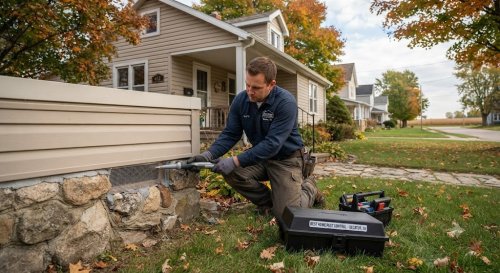
Exterior Building Envelope Sealing: Seal plumbing penetrations, electrical chases, and foundation cracks using copper mesh or stainless steel wool (Xcluder) backed with heavy-duty polyurethane sealant.
-
Attic & Crawlspace Insulation Audits: Inspect crawlspaces and attics for flattened fiberglass batts, burrow tunnels, and rodent droppings. Replace contaminated insulation and seal open subfloor gaps around drain stacks.
-
Firewood & Cellulose Storage: Elevate stored firewood at least 6 inches above soil level and maintain a 20-foot separation from structures. Clear cardboard boxes, scrap wood, and paper debris from basements and crawlspaces.
-
Weep Hole Shielding: Install stainless steel mesh covers in brick veneer weep holes to maintain structural airflow while blocking pest entry.
Spring/Summer Protocols
-
Vegetation Clearance: Maintain a strict 18-to-24-inch cleared buffer between foundation walls and garden beds, shrubs, or climbing vines. Prune tree branches back 6 to 8 feet from rooflines.
-
Drainage & Grade Management: Ensure topsoil slopes away from foundation walls at a minimum slope of 6 inches over 10 feet. Extend gutter downspouts at least 5 feet from the structure.
-
Door Sweeps & Window Screens: Install heavy-duty brush or rubber door sweeps on exterior entryways and garage doors. Repair torn window and door screens.
Year-Round Interior Habits
-
Pantry Storage Protocols: Store grain, pet food, and baking supplies in rigid glass or heavy-gauge plastic containers with airtight seals.
-
Relative Humidity Targets: Keep basement and crawlspace relative humidity strictly below 50% using continuous dehumidifiers and vapor barriers to eliminate drinking water sources.
-
Avoid Aerosol Spray Misuse: Never apply over-the-counter pyrethroid sprays directly over active ant bait stations or foraging trails; repellent contact sprays cause "budding" (colony fracturing) and destroy the bait acceptance pathway.
4. Emergency Dispatch Matrix
| Emergency Scenario | Primary Structural & Health Risks | Immediate Action Required |
| Active Rodents in Living/Prep Zones | Food contamination (Salmonella, Leptospirosis); wiring fire hazards from chewed insulation; airborne pathogens (Hantavirus). | Isolate pantry goods in glass or metal containers. Do not dry-sweep droppings. Call Best Home Pest Control at 937-809-8658 immediately. |
| Indoor Termite Alate Swarm | Active mature colony embedded inside structural framing; imminent risk of load-bearing wood destruction. | Do not use pyrethroid aerosol sprays. Vacuum emerging swarmers, save specimens in a jar for identification, and schedule an urgent inspection. |
| Interior Stinging Insect Nest | Structural drywall breakdown from nest moisture; risk of mass indoor stinging events and severe anaphylaxis. | Close off the affected room. Do not plug exterior exit gaps (forces yellowjackets to chew through interior drywall). Call for targeted dust extraction. |
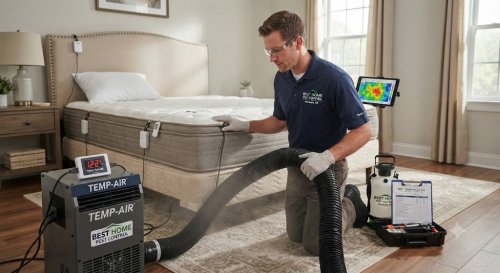
| Severe Bed Bug Infestation | Rapid, hidden indoor colonization; severe sleep deprivation and secondary skin infections from scratching. | Do not move infested furniture between rooms. Vacuum seams, wash bedding in high heat, and contact a specialist for thermal or chemical remediation. |
5. Systematic 5-Step Professional Inspection Workflow
To permanently eliminate ant colonies and prevent initial baiting surges from turning into chronic infestations, Best Home Pest Control executes a 5-step diagnostic workflow:
+-----------------------------------------------------------------------------------+
|                        5-STEP DIAGNOSTIC WORKFLOW MATRIX                          |
+-----------------------------------------------------------------------------------+
|  [Step 1] Exterior Perimeter & Entry Point Mapping                                |
|     └─ Map utility penetrations, foundation cracks, grease rub marks, rooflines   |
|                                                                                   |
|  [Step 2] Interior Micro-Habitat & Moisture Analysis                               |
|     └─ Deploy FLIR thermal imaging, pinless moisture meters, and borescopes      |
|                                                                                   |
|  [Step 3] Species Identification & Population Density Staging                     |
|     └─ Analyze droppings, damage patterns, and runway paths                       |
|                                                                                   |
|  [Step 4] Custom Integrated Pest Management (IPM) Formulation                    |
|     └─ Select non-repellent transfer chemistries, baits, and mechanical barriers|
|                                                                                   |
|  [Step 5] Targeted Application, Exclusion Installation & Follow-Up Monitoring     |
|     └─ Execute application, install physical exclusion, and set follow-ups        |
+-----------------------------------------------------------------------------------+
Step 1: Exterior Perimeter & Entry Point Mapping
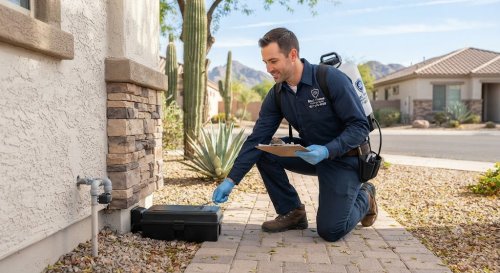
We conduct a 360-degree sweep of the building envelope, checking foundation expansion joints, cold joints, siding termination lines, utility chases, and rooflines for active foraging trails or entry gaps.
Step 2: Interior Micro-Habitat & Moisture Analysis
Technicians examine crawlspaces, basements, attics, utility chases, and wet walls:
-
Using pinless moisture meters to detect hidden moisture pockets inside structural framing (>15–20% Wood Moisture Content).
-
Deploying FLIR thermal imaging cameras to locate thermal anomalies caused by hidden pest nests or plumbing leaks.
Step 3: Species Identification & Population Density Staging
We collect specimens and examine physical indicators:
-
Differentiating carpenter ants (Camponotus) from subterranean termites (Reticulitermes) or sweet-eating house ants (Tapinoma sessile).
-
Evaluating trail density, nest location (parent vs. satellite nest), and food preference (carbohydrate vs. protein phase).
Step 4: Custom Integrated Pest Management (IPM) Formulation
We select active ingredients based on species biology:
-
Deploying delayed-action, non-repellent liquid transfer agents (e.g., fipronil, chlorfenapyr, indoxacarb) and specialized carbohydrate/protein bait matrixes.
-
Formulating structural exclusion plans for identified entry points.
Step 5: Targeted Application, Exclusion Installation & Follow-Up Monitoring
-
Executing precision bait placements and non-repellent perimeter applications.
-
Installing structural exclusions (copper mesh, high-grade polyurethane sealants) across entry points.
-
Setting perimeter monitoring stations and scheduling follow-up diagnostic re-inspections.
6. DIY Boundaries vs. Professional Interventions
| Safe DIY Homeowner Tasks | High-Risk / Pro-Only Interventions |
| Transferring pantry goods into sealed glass or metal food containers. | Sub-slab concrete drilling and high-pressure chemical termiticide injections. |
| Clearing leaf litter, firewood, and exterior debris 20+ feet from foundation walls. | Thermal heat remediation or structural tent fumigation for bed bugs or drywood termites. |
| Installing standard rubber door sweeps on exterior entry doors. | Large-scale attic or crawlspace biohazard decontamination and droppings cleanup. |
| Operating interior dehumidifiers to maintain basement relative humidity <50%. | Full structural mechanical exclusion using copper mesh and polyurethane sealants. |
| Placing consumer gel bait stations along verified foraging trails. | Wall void injection of non-repellent foams into active carpenter ant structural galleries. |
+-----------------------------------------------------------------------------------+
|                        4 MANDATORY PROFESSIONAL TRIGGER CONDITIONS                |
+-----------------------------------------------------------------------------------+
|  [Trigger 1] Daytime Pest Sightings in Primary Living or Food Prep Areas          |
|  [Trigger 2] Auditory Head-Banging, Chewing, or Wall Rustling Acoustics           |
|  [Trigger 3] Visible Mud Shelter Tubes, Frass Deposits, or Chewed Cables         |
|  [Trigger 4] Health / Allergic Threats or Unresolved Recurrent Infestations       |
+-----------------------------------------------------------------------------------+
7. Warning Signs: Sensory Diagnostics & Risks of Delay
Distinguishing between a temporary post-baiting surge and an escalating structural infestation requires evaluating visual, auditory, and olfactory indicators:
+-----------------------------------------------------------------------------------+
|                           SENSORY DIAGNOSTIC MATRIX                               |
+-----------------------------------------------------------------------------------+
|  SENSE     | COMMENSAL RODENTS                   | WOOD-DESTROYING INSECTS        |
|  ----------+-------------------------------------+--------------------------------|
|  Auditory  | Rapid scampering, loud gnawing      | Soft clicking (soldier heads), |
|            | behind drywall late at night.       | papery rustling inside timber. |
|  ----------+-------------------------------------+--------------------------------|
|  Visual    | Dark droppings, grease rub marks,   | Fine wood frass, mud tubes,    |
|            | shredded insulation batts, gnaw marks.| shed swarmer wings, pinholes   |
|            | in drywall paint surfaces.           | in painted surfaces.           |
|  ----------+-------------------------------------+--------------------------------|
|  Olfactory | Sharp, pungent ammonia urine scent; | Mildewy, damp earth odor       |
|            | stale, musky nest odors.            | near packed mud galleries.     |
+-----------------------------------------------------------------------------------+
Sensory Indicators
-
Auditory Signals: Nocturnal scampering, loud gnawing, or scratching inside wall voids indicates rodent activity. Faint rustling or soft paper-like clicking inside structural timber points to carpenter ants or termites.
-
Visual Signals: Coarse, window-pane-like frass piles containing insect body parts indicate carpenter ant excavation inside structural timber. Active trailing toward bait stations represents normal feeding behavior.
-
Olfactory Signals: Pungent, rotten coconut or blue-cheese-like odors when crushing small ants point to odorous house ants (Tapinoma sessile).
Risks of Delay
Allowing wood-destroying ants or termites to nest unchecked inside structural framing leads to compounding risks:
-
Structural Integrity Loss: Carpenter ants excavate smooth galleries inside load-bearing timber, joists, and wall studs to raise brood, leading to structural sagging over time.
-
Colony Fracturing (Budding): Spraying repellent contact insecticides over bait sites forces multi-queen ant species (e.g., odorous house ants) to split into multiple satellite colonies throughout the home.
-
Insurance Exclusions: Over 95% of standard homeowners insurance policies in the US explicitly exclude insect and pest damage as preventable home maintenance.
8. Cost Breakdown & Pricing Variables
Remediating ant infestations and structural pest threats involves specific inspection, treatment, and exclusion pricing factors:
+-----------------------------------------------------------------------------------+
|                        COST & PRICING VARIABLE PROFILE                            |
+-----------------------------------------------------------------------------------+
|  Initial Diagnostic Fee        | $150 – $350 (Often credited toward treatment)    |
|  Perimeter Non-Repellent Barrier| $200 – $450 (Targeted liquid exterior treatment) |
|  Wall Void Foam Injection      | $300 – $600 (Direct gallery remediation)          |
|  Structural Mechanical Exclusion| $500 – $1,800 (Based on perimeter scope)         |
|  Quarterly Service / Warranty  | $120 – $200 per quarter ($480–$800/year total)   |
+-----------------------------------------------------------------------------------+
Primary Price Drivers:
-
Property Square Footage & Linear Perimeter: The physical footprint dictates non-repellent liquid barrier volume and exterior exclusion labor hours.
-
Target Species & Nest Location: Eradicating simple surface-foraging ants differs from remediating deep-seated carpenter ant parent colonies embedded in second-story framing or wall voids.
-
Treatment Methodology: Professional non-repellent transfer chemistries (fipronil, indoxacarb) and specialized microencapsulated baits cost more than basic contact sprays, but deliver complete colony collapse via trophallaxis.
-
Custom Exclusion Labor: Sealing foundation gaps, soffit junctions, and utility chases with copper mesh and polyurethane sealants provides permanent protection.
9. Professional Equipment & Diagnostic Arsenal
| Diagnostic Tool / Technology | Technical Mechanism | Practical Application in Ant Diagnostics |
| FLIR Thermal Imaging Camera | Detects minute surface temperature differentials ($\Delta T \ge 0.5^\circ\text{C}$) caused by heat signatures or moisture. | Identifies hidden moisture pockets, plumbing leaks, and active carpenter ant nest clusters inside wall voids. |
| Pinless Moisture Meters | Uses electromagnetic radio frequencies to measure Wood Moisture Content (%WMC). | Pinpoints structural framing with elevated moisture (>15–20% WMC) that attracts carpenter ant satellite nests. |
| Digital High-Definition Borescope | Uses a flexible 5.5mm fiber-optic cable with LED illumination passed through pilot holes. | Inspects internal wall voids and utility chases to confirm nest galleries and frass accumulation without demolition. |
| Acoustic Emission Detector | Amplifies high-frequency acoustic stress waves (20 kHz–100 kHz) via piezoelectric sensors. | Detects minute acoustic rustling vibrations produced by carpenter ants excavating timber galleries. |
| Non-Repellent Transfer Chemistries | Utilizes undetectable active ingredients (fipronil, chlorfenapyr) that insects cannot sense. | Allows worker ants to travel through treated zones, pick up lethal doses, and transfer chemistry to the queen via grooming (trophallaxis). |
10. Industry Hard Truths & Insider Facts
-
Initial Ant Surges at Bait Stations Are Necessary: A surge in visible ants at a bait site confirms the bait matrix is palatable and recruitment pheromones are actively drawing workers. Attempting to spray these ants ruins the transfer process needed to kill the queen.
-
OTC Bug Bombs / Foggers Worsen Ant Problems: Total-release foggers deposit surface pyrethroids that trigger "budding" in multi-queen ant species, causing a single colony to fracture into multiple independent nests across wall voids.
-
Ultrasonic Plug-In Repellers Do Not Work: Peer-reviewed scientific studies confirm ultrasonic devices fail to alter ant or rodent foraging behavior.
-
Chemical Applications Without Physical Exclusion Fail: Applying insecticides while leaving foundation gaps, soffit voids, or plumbing leaks unsealed results in recurring invasions once chemical residuals degrade.
11. Comprehensive FAQ Section
Why do ant baits draw out so many ants right after installation?
Ant baits contain attractive carbohydrate or protein food matrixes paired with slow-acting active ingredients. Scout ants find the bait, return to the nest while laying recruitment pheromone trails, and mobilize large numbers of worker ants to harvest the food and feed it to the larvae and queen via trophallaxis.
How long should the ant surge last before the population declines?
A typical post-baiting surge lasts between 24 and 72 hours. As the slow-acting active ingredient spreads through the colony, worker mortality increases, trail recruitment breaks down, and total colony collapse occurs within 7 to 14 days.
What happens if I spray the ants gathering at the bait station with aerosol spray?
Spraying foraging ants at a bait station kills those workers on contact, breaks the pheromone trail, and prevents the toxic bait from reaching the queen. In species like odorous house ants, contact sprays trigger colony stress, causing the colony to split into multiple satellite nests (budding).
Are professional ant treatments safe for children and pets?
Yes, when applied by a licensed technician in accordance with EPA label directions. Professional ant gel baits and bait stations are applied in tiny, targeted micro-dots inside crack-and-crevice locations, wall voids, or locked, tamper-resistant enclosures out of reach of children and pets.
How do I visually distinguish winged termites from swarming carpenter ants?
Examine three physical characteristics:
-
Waist: Termites have a broad, uniform waist with no narrow pinch. Ants have a narrow, pinched waist (petiole).
-
Antennae: Termite antennae are straight and bead-like. Ant antennae are distinctly elbowed.
-
Wings: Termite swarmers have four wings of equal size and shape. Carpenter ants have front wings that are larger than their hind wings.
  TERMITE SWARMER                      CARPENTER ANT SWARMER
     \  ||  /  <- Straight Antennae       \  /  <- Elbowed Antennae
      \ || /                               \/
      (____)   <- Broad Waist            (  )   <- Pinched Waist
      (____)                             (  )
     / |  | \                            / || \
    /  |  |  \                          /  ||  \
   Equal Length Wings                 Unequal Wing Lengths
How should I prepare my home for a professional ant inspection?
Do not spray or clean away active ant trails immediately before the inspection; technicians need to observe trail orientation to locate primary entry gaps. Provide clear physical access along perimeter baseboards, under kitchen sinks, and around utility chases.
What causes the "flushing out" phenomenon after pest control treatments?
This effect occurs when non-repellent chemistries, precision dusts, or bait matrixes disrupt nested harborages. Disoriented pests temporarily leave hiding spots in search of clean harborages, leading to a brief increase in visual sightings before total population elimination.
Why does standard expanding spray foam fail against rodent teeth?
Standard off-the-shelf polyurethane expanding foam cures into a soft, air-filled structure that rodent incisors easily chew through. Effective exclusion requires filling openings with stainless steel mesh or copper mesh before sealing with heavy polyurethane foam or caulk.
Facing an Ant Invasion or Persistent Pest Problem?
Don't let ant surges or unaddressed structural entry points compromise your home. Contact Best Home Pest Control at 937-809-8658 to schedule a professional diagnostic inspection today.