Complete Inspection & Removal Guide | Best Home Pest Control
Trace recurring ant infestations to the main colony nest. Learn IPM inspection steps, DIY limits, and prevention tips. Call 937-809-8658 today

Complete Inspection & Remove Guide | Best Home Pest Control
Recurring ant infestations—specifically odorous house ants (Tapinoma sessile), pavement ants (Tetramorium immigrans), and carpenter ants (Camponotus spp.)—are rarely isolated events. They indicate structural vulnerabilities and established satellite colonies within or immediately adjacent to the building envelope.
          SEASONAL WEATHER & ANT COLONY RELOCATION
 ┌──────────────────────┐         ┌────────────────────────┐
 │ Environmental Drives │         │ Architectural Triggers │
 ├──────────────────────┤         ├────────────────────────┤
 │ Heavy Spring Rains   ├────────►│ Siding-to-Grade Contact│
 │ Summer Heat Waves    ├────────►│ Unsealed Utility Chases│
 │ Winter Frost Line    ├────────►│ Damp Subfloors & Joists│
 └──────────────────────┘         └────────────────────────┘
                                               │
                                               ▼
                                  ┌────────────────────────┐
                                  │ Recurring Ant Trails   │
                                  └────────────────────────┘
Structural and climatic drivers across U.S. residential architecture create persistent ant pressure:
-
Spring Thaws & Rainfall: Rising water tables flood subterranean parent nests, forcing foraging workers and queens upward into structural voids and wall cavities.
-
Summer Heat & Moisture Stress: Extended dry spells drive foraging worker ants along exterior plumbing penetrations, HVAC lines, and window sills in search of indoor moisture sources (kitchen drains, condensation pans, leaking pipes).
-
Unsealed Siding-to-Grade Interfaces: Wood siding, vinyl trim, or stucco expanding past the foundation sill plate provides concealed access directly into rim joists and wall frames, bypassing visible perimeter barriers.
-
Overhanging Canopy Touchpoints: Mature tree branches contacting roof soffits act as high-speed transit highways for carpenter ants and trailing species to enter attics without touching soil.
3. Seasonal Pest Prevention Framework
                    SEASONAL PEST CONTROL TIMELINE

   SPRING / SUMMER                        FALL / WINTER
  ┌─────────────────────────┐            ┌─────────────────────────┐
  │ • Trim Canopy 18–24"    │            │ • Seal Envelope (<1/4") │
  │ • Fix Downspout Grades  │            │ • Check Insulation      │
  │ • Install Door Sweeps   │            │ • Off-Ground Firewood   │
  │ • Check Window Screens  │            │ • Install Copper Mesh   │
  └────────────┬────────────┘            └────────────┬────────────┘
               │                                      │
               └──────────────────┬───────────────────┘
                                  │
                                  ▼
                     ┌─────────────────────────┐
                     │   YEAR-ROUND HABITS     │
                     ├─────────────────────────┤
                     │ • Sealed Food Storage   │
                     │ • Relative Humidity <50%│
                     │ • No OTC Spray Bombs    │
                     └─────────────────────────┘
Fall/Winter Protocols
-
Exterior Envelope Sealing: Inspect structural perimeters and seal gaps wider than 1/4 inch ($6.35\text{ mm}$) around pipe chases, foundation cracks, and sill plates using $100\%$ silicone sealant or expandable polyurethane foam packed with copper mesh.
-
Attic and Crawlspace Inspections: Check crawlspace vapor barriers and verify that insulation in attics and subfloors remains dry and free of damp wood decay that attracts nesting satellite ant colonies.
-
Firewood and Debris Management: Elevate stored firewood at least $6\text{ inches}$ off the ground and keep it $20\text{ feet}$ away from exterior walls to destroy overwintering harborage for ant queens and rodents.
-
Weep Hole Protection: Retrofit brick veneer weep holes with stainless-steel or plastic wire inserts to block ant pathways while maintaining cavity airflow.
Spring/Summer Protocols
-
Vegetation Clearances: Prune back tree branches, ornamental shrubs, and climbing vines to maintain a strict $18\text{ to }24\text{-inch}$ clearance zone away from rooflines, siding, and gutters.
-
Drainage and Downspout Grading: Ensure exterior downspout extensions discharge runoff water at least $4\text{ to }6\text{ feet}$ away from foundation walls to prevent high-moisture soil pockets.
-
Moisture Reduction: Repair leaking exterior spigots, HVAC condensate drain lines, and irrigation heads that create damp micro-environments near structural foundations.
-
Door and Window Seals: Install durable neoprene door sweeps on exterior entry doors and ensure window screens fit tightly within frames.
Year-Round Interior Habits
-
Food Storage Protocols: Store sugars, syrups, pet food, and baked goods in airtight glass or polyethylene containers. Clean sub-appliance floor spaces and counter surfaces daily.
-
Relative Humidity Control: Keep indoor relative humidity below $50\%$ using commercial dehumidifiers, eliminating condensed water sources that sustain trailing ant workers.
-
Avoid Aerosol Misuse: Avoid using off-the-shelf pyrethroid aerosol sprays directly on active trailing ant lines; repelling agents scatter the colony and trigger "budding" (splitting into multiple sub-colonies).
4. Emergency Dispatch Matrix
| Emergency Scenario | Primary Structural & Health Risks | Immediate Action Required |
| Active Rodents in Living / Food-Prep Zones | Electrical fire hazard from wire gnawing; contamination via Salmonella, Leptospirosis, and Hantavirus. | Isolate food stores, remove pet food bowls, close internal doors, and call Best Home Pest Control at 937-809-8658. |
| Stinging Insects inside Wall Voids / Attics | Anaphylactic shock risk; structural drywall collapse due to moisture buildup from large nest structures (Vespula spp.). | Do not block exterior exit holes. Seal interior room access, vacate the immediate zone, and contact emergency extermination. |
| Interior Wildlife Encounters (Raccoons, Bats, Opossums) | Rabies virus exposure, Histoplasmosis from guano accumulation, severe physical bite hazards, structural insulation destruction. | Evacuate the room, keep pets away, shut interior access doors, and call emergency wildlife control immediately. |
| Severe Bed Bug (Cimex lectularius) Infestations | Severe sleep deprivation, secondary skin infections from scratching, rapid transfer across multi-unit or single-family structures. | Encase mattresses in bug-proof covers, do not move furniture between rooms, isolate laundry, and schedule thermal heat/chemical treatment. |
5. Systematic 5-Step Professional Inspection Workflow
   1. Perimeter & Entry Point Mapping
                  │
                  ▼
   2. Interior Micro-Habitat & Moisture Analysis (Borescopes, Moisture Meters)
                  │
                  ▼
   3. Species Identification & Population Density Staging
                  │
                  ▼
   4. Custom Integrated Pest Management (IPM) Formulation
                  │
                  ▼
   5. Targeted Application, Exclusion Installation & Follow-Up Monitoring
-
Exterior Perimeter & Entry Point Mapping:
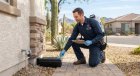
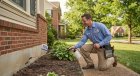
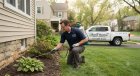
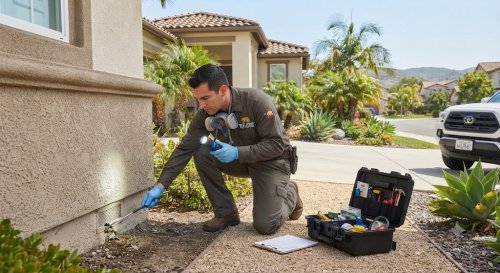
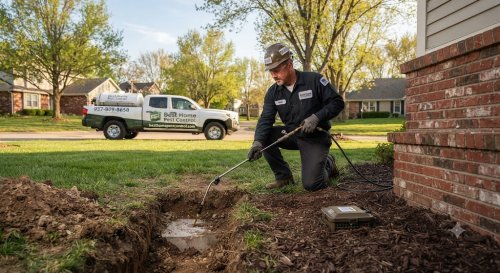
Technicians execute a comprehensive $360\text{-degree}$ perimeter sweep, mapping structural interfaces, expansion joints, window wells, utility penetrations, and vegetation bridges where ants establish foraging trails.
-
Interior Micro-Habitat & Moisture Analysis:
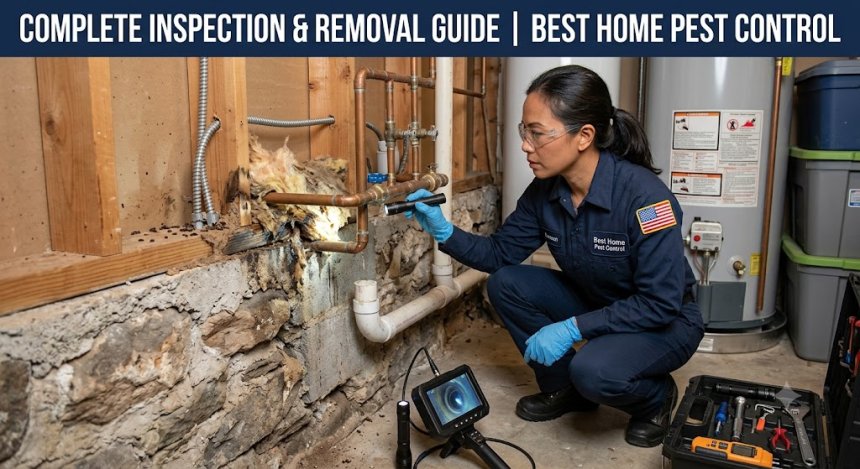
Using pinless moisture meters, FLIR thermal cameras, and digital borescopes, technicians locate hidden interior moisture pockets inside wall voids, under sink bases, and around plumbing chases where satellite nests thrive.
-
Species Identification & Population Density Staging:
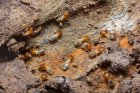
Accurate morphological identification of the ant species (e.g., distinguishing carpenter ants from odorous house ants or pavement ants) is critical to determine nesting behavior, foraging preferences (protein vs. carbohydrate), and overall population size.
-
Custom Integrated Pest Management (IPM) Formulation:
Designing a custom treatment plan combining environmental moisture corrections, structural exclusion repairs, non-repellent transfer chemistry, and species-specific slow-acting gel/granulated bait formulations.
-
Targeted Application, Exclusion Installation & Follow-Up Monitoring:
Applying non-repellent transfer agents (such as fipronil or chlorfenapyr), installing physical exclusion barriers (copper mesh, silicone sealants), and positioning monitoring stations to confirm total colony elimination.
6. DIY Boundaries vs. Professional Interventions
| Safe DIY Homeowner Tasks | High-Risk / Pro-Only Interventions |
| Replacing worn exterior door sweeps and window screens. | Applying restricted-use termiticides (e.g., trenching and rodding termiticide barriers). |
| Vacuuming visible insect aggregations or isolated dead pests. | Inspecting and treating interior electrical panels, live wall voids, or drop ceilings. |
| Clearing leaf clutter and organic debris away from foundation walls. | Sub-slab chemical injections, structural drilling, or structural fumigation tenting. |
| Storing pantry foods in airtight sealed glass/plastic containers. | Wild animal trapping/removal (raccoons, bats, opossums) involving exposure/rabies risks. |
[!CAUTION]
Pro-Only Trigger Conditions: Drop tools and call Best Home Pest Control (937-809-8658) immediately if you observe:
Daytime sightings of nocturnal pests (e.g., German cockroaches, rats), indicating severe overpopulation.
Persistent scratching, scurrying, or buzzing sounds originating from inside wall voids or ceiling joists.
Visual wood damage accompanied by kick-out holes, frass piles, or shelter mud tubes on foundation walls.
Any occupant experiencing severe allergic reactions, unexplained skin bites, or asthmatic distress linked to pest activity.
7. Warning Signs: Sensory Diagnostics & Risks of Delay
Sensory Indicators
                         SENSORY DIAGNOSTICS
  ┌──────────────────────────────────────────────────────────────┐
  │                                                              │
  │   [AUDITORY]   ──►  Drywall Scratching, Ant Rustling         │
  │                                                              │
  │   [VISUAL]     ──►  Frass Piles, Mud Tubes, Rub Marks, Wings │
  │                                                              │
  │   [OLFACTORY]  ──►  Ammonia Odors, Sweet Mustiness, Rot      │
  │                                                              │
  └──────────────────────────────────────────────────────────────┘
-
Auditory Diagnostics:
-
Drywall Scratching/Scurrying: Nighttime scampering or gnawing behind drywall signals active rodent activity inside wall voids.
-
Ant Rustling: A faint, dry rustling sound within hollow doors, window headers, or insulated wall panels indicates an expanding carpenter ant parent or satellite colony.
-
Rhythmic Clicking: Head-banging soldier termites produce distinct clicking sounds inside hollowed structural timbers when alarmed.
-
-
Visual Diagnostics:
-
Frass and Sawdust Piles: Accumulations of coarse wood shavings containing insect fragments beneath kick-out holes indicate carpenter ant gallery excavation. Fine, sand-like pellets point to drywood termites.
-
Foraging Trails & Shed Wings: Persistent single-file ant lines along baseboards or foundation ledges reveal established trails between food sources and satellite nests. Discarded wings near sills signal swarming reproductive flights.
-
-
Olfactory Diagnostics:
-
Rotten Coconut Smell: Crushing odorous house ants (Tapinoma sessile) releases a sharp, rotten-coconut or rancid butter odor caused by defensive chemical compounds.
-
Ammonia Odors: Sharp, pungent urine smells in enclosed cabinet bases, attics, or subfloors confirm heavy rodent harborage.
-
Musty / Decaying Stench: Persistent musty odors indicate fungal wood decay, hidden moisture accumulation, or dead pest matter inside wall cavities.
-
Cascading Consequences of Inaction
-
Electrical Hazards: Rodents chew through building electrical wiring, exposing live conductors and creating short circuits that lead to structure fires.
-
Structural Failures: Carpenter ants and termites excavate structural studs, joists, and rafters, compromising load-bearing integrity and requiring expensive structural restoration.
-
Pathogen & Food Contamination: Foraging ants and rodents track bacteria (Salmonella, E. coli) across kitchen counters, food prep areas, and open pantry supplies.
8. Cost Breakdown & Pricing Variables
Professional pest control costs depend on structural access, square footage, and treatment scope:
                  TOTAL SERVICE COST STRUCTURE
 ┌────────────────────────────────────────────────────────────┐
 │  Base Diagnostic Fee                                       │
 ├────────────────────────────────────────────────────────────┤
 │  + Property Size & Access Difficulty (Crawlspaces/Attics)  │
 ├────────────────────────────────────────────────────────────┤
 │  + Treatment Methodology (Heat vs Chemical vs Exclusion)   │
 ├────────────────────────────────────────────────────────────┤
 │  + Service Plan Structure (One-Time vs Recurring Plan)     │
 └────────────────────────────────────────────────────────────┘
-
Initial Diagnostic & Inspection Fees:
Comprehensive structural diagnostic evaluations assess infestation severity, species behavior, entry points, and moisture triggers.
-
Square Footage & Structural Access:
Larger structures, multi-level layouts, tight crawlspaces, or steep rooflines require additional labor time, safety gear, and material volume.
-
Treatment Methodology Required:
-
Targeted Non-Repellent Chemistries: Applying non-repellent liquid transfer agents and microencapsulated baits.
-
Thermal Heat Remediation: Utilizing high-output heat equipment for bed bug or wood-boring insect eradication.
-
Structural Exclusion Labor: Installing stainless steel mesh, custom metal flashing, polyurethane sealants, and concrete void fillers.
-
-
Service Plan Structure:
-
One-Time Emergency Interventions: Higher upfront cost for immediate population knockdown, trail breakdown, and targeted exclusion.
-
Recurring Maintenance Plans (Quarterly/Bi-Monthly): Cost-effective ongoing protection that maintains protective perimeter barriers and offers retreatment guarantees.
-
9. Professional Equipment & Diagnostic Arsenal
| Equipment / Material Name | Technical Category | Practical Application & Function |
| FLIR Thermal Imaging Camera | Non-Destructive Diagnostic | Identifies concealed thermal signatures caused by moisture leaks, hollowed carpenter ant galleries, or rodent nesting clusters within walls. |
| Digital Articulating Borescope | Optical Inspection | Enables high-resolution optical inspection inside wall voids, plumbing chases, and drop ceilings through micro-drilled entry ports. |
| Pinless Moisture Meter | Environmental Measurement | Measures percentage wood moisture content (% WMC) without surface damage to locate hidden damp zones supporting satellite ant nests. |
| Acoustic Listening Devices | Sonic Diagnostic | Amplifies micro-acoustic vibrations from carpenter ant movement, larval feeding, or subterranean termite soldier head-banging. |
| Non-Repellent Transfer Chemistries | Chemical Remediation | Active ingredients (e.g., Fipronil, Chlorfenapyr) that foraging worker ants carry back to the central queen via social grooming and trophallaxis. |
10. Industry Hard Truths & Insider Facts
-
Why Over-The-Counter Total-Release Foggers ("Bug Bombs") Fail:
Aerosol bug bombs release repellent aerosol pyrethroids that cover flat horizontal surfaces without reaching hidden nest sites inside wall voids, behind baseboards, or under cabinets. The repellent effect causes "colony budding," forcing the primary ant nest to break apart and establish multiple new satellite colonies throughout the house.
-
The Ineffectiveness of Ultrasonic Plug-In Repellers:
Scientific research confirms ultrasonic pest repellers do not eliminate or deter pest populations. Target pests adapt quickly to constant sound frequencies, and solid objects like drywall and furniture easily block ultrasonic waves.
-
Chemical Applications Without Physical Exclusion Always Fail:
Spraying liquid barriers without sealing physical entry gaps or eliminating structural moisture yields only temporary relief. New ant trails will establish as soon as exterior chemical barriers degrade from UV light and rain exposure.
-
The Insurance Trap (Does Homeowners Insurance Cover Termite or Pest Damage?):
[!WARNING]
The Insurance Reality: Standard homeowners insurance policies DO NOT cover termite, insect, or rodent damage. Insurance carriers classify pest damage as "preventable structural maintenance" rather than a sudden, accidental event. Homeowners are financially responsible for structural repairs caused by wood-destroying organisms or pest chewing unless an un-associated covered peril (like a burst pipe) directly caused the infestation. Continuous inspection and maintenance programs remain the only reliable protection against catastrophic repair costs.
11. Comprehensive FAQ Section
Q1: How long after treatment will it take to eliminate the pest colony completely?
Targeted pest control treatments usually achieve initial population knockdown within $24\text{ to }48\text{ hours}$. Total colony elimination varies by species and treatment method:
-
German Cockroaches & Ants: $1\text{ to }3\text{ weeks}$ via baiting and non-repellent transfer agents.
-
Subterranean Termites: $30\text{ to }90\text{ days}$ for complete colony destruction via non-repellent liquid termiticides or chitin synthesis inhibitor baiting systems.
Q2: Are the chemical applications safe for children and household pets?
Yes, when applied according to strict EPA-registered label instructions by a licensed professional. Modern IPM protocols emphasize targeted micro-injections into crack-and-crevice locations, wall voids, and tamper-resistant bait stations inaccessible to children and pets. Homeowners are instructed to keep pets and family members off treated surfaces until liquid products have fully dried (typically $2\text{ to }4\text{ hours}$).
Q3: How do I visually distinguish winged termites from swarming carpenter ants?
                     ANT vs. TERMITE IDENTIFICATION

      CARPENTER ANT                         SUBTERRANEAN TERMITE
   ┌─────────────────┐                       ┌─────────────────┐
   │ Elbowed Antenna │                       │ Straight Antenna│
   ├─────────────────┤                       ├─────────────────┤
   │ Constricted     │                       │ Straight, Broad │
   │ Pinch Waist     │                       │ Waist           │
   ├─────────────────┤                       ├─────────────────┤
   │ Unequal Wings   │                       │ Equal Wings     │
   │ (Front > Back)  │                       │ (Front = Back)  │
   └─────────────────┘                       └─────────────────┘
Visual identification can be made using three distinct physical features:
-
Antennae: Termites possess straight, bead-like antennae; carpenter ants have distinctly elbowed antennae.
-
Waistline: Termites feature a broad, straight waistline; ants have a constricted, pinched waist ("petiole").
-
Wing Architecture: Termite swarmers have two pairs of wings that are equal in size and length, folding flat over the abdomen; carpenter ant swarmers have unequal wing pairs (front wings are distinctly larger than hind wings).
Q4: How should a homeowner prepare their living space prior to professional bed bug or cockroach treatments?
For bed bug remediation, strip all bed linens, pillowcases, and mattress covers, then wash and dry them on high heat ($>120^\circ\text{F}$ or $49^\circ\text{C}$). De-clutter floors, vacuum thoroughly, and pull furniture $12\text{ inches}$ away from perimeter walls. For cockroach treatments, empty under-sink areas, wipe down kitchen counters, clean behind major appliances, and remove all exposed food items.
Q5: Why do I see increased pest activity ("flushing out") immediately following professional treatment?
Non-repellent chemistries, flushing agents, and insect growth regulators (IGRs) irritate target pests and disrupt their nervous systems, forcing them out of concealed harborage voids. This increased activity is a normal sign that the treatment is working as pests pass through applied control barriers. Activity levels typically decline sharply within $7\text{ to }14\text{ days}$.
Q6: Why does expanding spray foam fail to stop persistent rodent intrusions?
Standard polyurethane expanding foam cures into a soft, cellular matrix that rats and mice easily gnaw through. Rodents can chew through foam in seconds. Effective rodent exclusion requires fill materials reinforced with copper mesh, stainless steel wool, heavy-gauge hardware cloth, or specialized rodent-resistant elastomeric sealants.
Q7: How often should residential homes undergo professional pest and termite inspections?
Properties should undergo a complete professional pest and WDO inspection at least once per year. Homes located in high-moisture climate regions, densely wooded environments, or historical structural districts benefit from bi-monthly or quarterly maintenance inspection schedules to identify structural envelope breaches before populations become established.
Q8: What are the primary foundation attractants for subterranean termite swarms?
Subterranean termites are attracted to moisture accumulation around foundations and direct soil-to-wood structural contacts. Key attractants include:
-
Landscaping mulch placed directly against foundation walls.
-
Rotted wooden landscape timbers, tree stumps, and buried construction debris.
-
Leaking hose bibbs, clogged downspouts, and improper soil grading that pools water against concrete walls.
-
Cellulose materials (cardboard boxes, scrap lumber) stored directly on damp crawlspace or basement floors.
Need Help Locating a Persistent Ant Colony?
Stop temporary DIY fixes and eliminate recurring ant infestations at the main source. Call the licensed specialists at Best Home Pest Control today at 937-809-8658 to schedule a professional IPM inspection and eradication plan.