USA Pest Control: Selling Home With Termite Damage | Best Home Pest Control
Can you sell a home with termite damage in the USA? Learn legal disclosure rules, inspection fixes, and treatment steps. Call 937-809-8658.

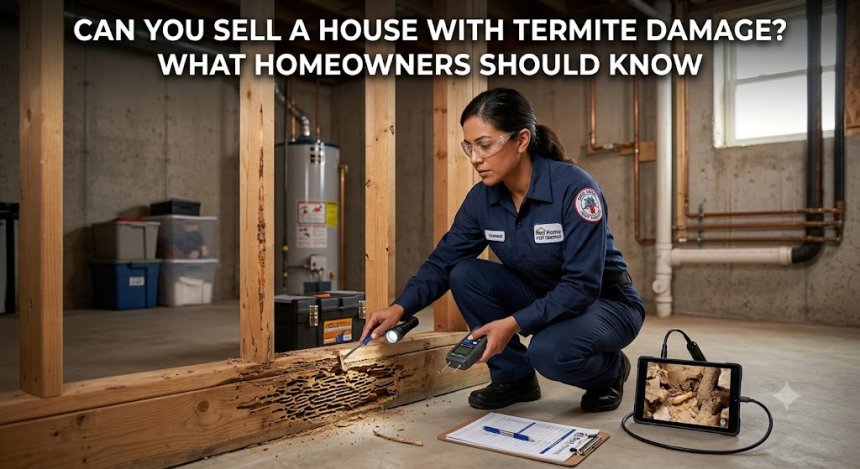
Can You Sell a House With Termite Damage? What Homeowners Should Know
Yes, you can legally sell a house with termite damage in the USA, but doing so requires navigating strict real estate disclosure laws, Wood-Destroying Organism (WDO) inspection requirements, and buyer financing constraints (such as FHA and VA loan mandates). Subterranean termites (Reticulitermes spp.) feed continuously on structural cellulose, exploiting regional architectural vulnerabilities across American residential homes.
+-----------------------------------------------------------------------------------+
|                        REAL ESTATE & STRUCTURAL RISK PIPELINE                     |
+-----------------------------------------------------------------------------------+
|  [ Moisture Intrusion ] ---> Subterranean Termite Invasion ---> Structural Damage |
|                                                                                |
|  [ WDO Inspection ]    ---> Triggers Active Colony / Rot   ---> Lender Denials |
|                                                                                |
|  [ Proactive Remediation] -> Non-Repellent Barrier + Clearance -> Clear Escrow   |
+-----------------------------------------------------------------------------------+
-
Slab-on-Grade Foundations: Plumbing penetrations through concrete slabs create hidden pathways where subterranean termites enter unnoticed. Soft plumbing leaks beneath slabs saturate sill plates, inviting colony foraging directly behind drywall during real estate transactions.
-
Crawlspaces & Full Basements: Unvented crawlspaces without a 6-mil polyethylene vapor barrier maintain relative humidity above 70%. When wood moisture content (%WMC) exceeds 15–20%, sill plates and floor joists become targets for both termites and decay fungi, leading to flags on buyer home inspections.
-
Exterior Cladding & Grade Contacts: Stucco or siding installed below soil level shields mud shelter tubes from visual sweeps. Inspectors look for soil-to-wood contact points along porches, decks, and garage jambs that jeopardize clear WDO report issuance.
Failing to declare known termite damage on seller disclosure forms can lead to post-closing litigation for fraud or misrepresentation. Proactive professional remediation and documented structural clearance are essential for protecting property values and ensuring smooth real estate closings.
3. Seasonal Pest Prevention Framework
Protecting property value and preventing active subterranean termite infestation requires year-round structural maintenance.
+-----------------------------------------------------------------------------------+
|                        SEASONAL MOISTURE & PEST MANAGEMENT                        |
+-----------------------------------------------------------------------------------+
|  SPRING/SUMMER           |  FALL/WINTER             |  YEAR-ROUND INTERIOR        |
|  - 18-24" Veg Buffer     |  - Seal Envelope         |  - Crawlspace RH <50%       |
|  - Extend Downspouts 5'+ |  - Manage Firewood       |  - Fix Micro-Leaks          |
|  - Maintain Soil Gap 6"+ |  - Clear Weep Holes      |  - Monitor Plumbing Chases  |
+-----------------------------------------------------------------------------------+
Fall/Winter Protocols
-
Building Envelope Sealing: Inspect and seal expansion joints, utility chases, and foundation cracks using exterior-grade polyurethane sealants.
-
Cellulose Storage Clearances: Elevate firewood at least 6 inches above soil and keep it 20 feet away from foundation walls. Clear scrap timber, cardboard, and wooden debris out of basements and crawlspaces.
-
Weep Hole Protection: Insert stainless steel mesh covers into brick veneer weep holes to maintain structural ventilation while blocking insect entry.
Spring/Summer Protocols
-
Vegetation Buffer: Maintain an 18-to-24-inch cleared space between foundation walls and garden beds, shrubs, or climbing vines to eliminate bridge pathways.
-
Grade & Drainage Management: Ensure soil slopes away from the foundation at a minimum grade of 6 inches over 10 feet. Extend downspout splash blocks or drain lines at least 5 feet from foundation walls.
-
Siding Clearance: Preserve a minimum 6-inch bare concrete gap between the bottom edge of siding (vinyl, wood, or stucco) and the top of soil or mulch beds.
Year-Round Interior Habits
-
Relative Humidity Targets: Keep crawlspace and basement relative humidity strictly below 50% using continuous dehumidification to deter termites and fungal decay.
-
Plumbing Maintenance: Repair minor drips under sinks, around water heaters, and along HVAC condensate lines immediately.
-
Avoid Aerosol Misuse: Never apply over-the-counter pyrethroid sprays directly to active termite galleries or mud tubes; doing so scatters worker termites into adjacent uninspected wall cavities.
4. Emergency Dispatch Matrix
| Emergency Scenario | Primary Structural & Health Risks | Immediate Action Required |
| Indoor Termite Alate Swarm (Swarmers or shed wings inside living spaces) | Active, mature colony embedded within structural framing; high risk of ongoing, unmonitored cellulose destruction. | Do not use pyrethroid aerosol sprays. Vacuum up emerging insects, retain samples in a jar for species identification, and call Best Home Pest Control at 937-809-8658 immediately. |
| Rodent Activity in Living/Prep Areas | Chewed electrical insulation (fire hazard), food contamination (Salmonella, Leptospirosis), pathogen spread from droppings. | Store all food in sealed glass or metal containers. Avoid dry sweeping droppings to prevent aerosolizing pathogens. Call for professional exclusion and sanitation. |
| Interior Stinging Insect Nest | Structural drywall erosion from nest moisture; risk of mass indoor stinging events and severe allergic reactions. | Isolate the room. Do not plug the exterior entrance (forces insects to chew through interior drywall). Schedule professional targeted dust extraction. |
| Severe Bed Bug Infestation | Widespread indoor colonization, severe sleep disturbance, secondary skin infections from scratching bite sites. | Avoid moving infested furniture or bedding between rooms. Vacuum seams, wash bedding in high heat, and contact a licensed specialist for thermal or chemical treatment. |
5. Systematic 5-Step Professional Inspection Workflow
To issue official WDO clearance documentation for home sales, Best Home Pest Control uses a rigorous 5-step diagnostic process grounded in Integrated Pest Management (IPM):
+-----------------------------------------------------------------------------------+
|                        5-STEP DIAGNOSTIC WORKFLOW MATRIX                          |
+-----------------------------------------------------------------------------------+
|  [Step 1] Exterior Perimeter & Entry Point Mapping                                |
|     └─ Inspect foundation, grade line, downspouts, mulch, and mud tubes           |
|                                                                                   |
|  [Step 2] Interior Micro-Habitat & Moisture Analysis                              |
|     └─ Utilize FLIR thermal cameras, pinless moisture meters, and borescopes    |
|                                                                                   |
|  [Step 3] Species Identification & Structural Staging                             |
|     └─ Confirm species; sound timber and check gallery depth                      |
|                                                                                   |
|  [Step 4] Custom IPM Strategy Formulation                                         |
|     └─ Apply targeted non-repellents (fipronil) and/or baiting networks          |
|                                                                                   |
|  [Step 5] Application, Mechanical Exclusion, & Ongoing Monitoring                 |
|     └─ Perform precision treatment, structural exclusion, and issue clearance     |
+-----------------------------------------------------------------------------------+
Step 1: Exterior Perimeter & Entry Point Mapping
We inspect the entire building envelope, evaluating soil-to-wood contact points, grade levels, downspout drainage, and foundation expansion joints for mud shelter tubes.
Step 2: Interior Micro-Habitat & Moisture Analysis
We inspect crawlspaces, basements, utility chases, garage edges, and wet walls using pinless moisture meters and FLIR thermal imaging cameras to detect hidden moisture pockets and internal gallery activity.
Step 3: Species Identification & Structural Staging
We identify specific pest species (Reticulitermes, Coptotermes, Incisitermes) and evaluate damage depth by tapping timber (sounding) and deploying digital borescopes into suspect voids.
Step 4: Custom Integrated Pest Management (IPM) Formulation
We formulate a targeted strategy that pairs structural moisture correction with non-repellent transfer chemistries (e.g., fipronil) or chitin synthesis inhibitor baiting networks.
Step 5: Application, Mechanical Exclusion, & Clearance Documentation
We execute trenching, sub-slab injection, or bait installation, complete structural exclusions using copper mesh and sealants, and issue official WDO clearance inspection reports required for escrow closing.
6. DIY Boundaries vs. Professional Interventions
| Safe DIY Homeowner Tasks | High-Risk / Pro-Only Interventions |
| Clearing gutter debris and extending downspout drain lines 5+ feet from foundation. | Sub-slab concrete drilling and high-pressure chemical termiticide injection. |
| Repairing visible indoor plumbing leaks beneath sinks and around fixtures. | Perimeter soil trenching and applying termiticide near water wells or cisterns. |
| Removing wood mulch, leaf litter, and scrap timber from foundation edges. | Replacing load-bearing floor joists, sill plates, or installing support jacks. |
| Installing dehumidifiers to keep crawlspace/basement relative humidity below 50%. | Comprehensive colony elimination using chitin synthesis inhibitor bait networks. |
| Sealing above-grade siding gaps with exterior silicone or acrylic sealants. | Issuing official WDO clearance inspection documentation required for real estate closing. |
+-----------------------------------------------------------------------------------+
|                        4 MANDATORY PROFESSIONAL TRIGGER CONDITIONS                |
+-----------------------------------------------------------------------------------+
|  [Trigger 1] Active Swarmers or Discarded Wings Discovered Indoors                |
|  [Trigger 2] Auditory Head-Banging or Rustling Noises Inside Wall Voids           |
|  [Trigger 3] Visible Mud Shelter Tubes on Foundation Walls or Structural Framing   |
|  [Trigger 4] Sagging Subfloors, Cracking Drywall, or Misaligned Door Jambs        |
+-----------------------------------------------------------------------------------+
7. Warning Signs: Sensory Diagnostics & Risks of Delay
Evaluating a property for termite issues requires monitoring visual, auditory, and olfactory indicators:
+-----------------------------------------------------------------------------------+
|                           SENSORY DIAGNOSTIC MATRIX                               |
+-----------------------------------------------------------------------------------+
|  SENSE     | SUBTERRANEAN TERMITE SIGNALS        | FUNGAL WOOD ROT / LEAKS        |
|  ----------+-------------------------------------+--------------------------------|
|  Visual    | Mud shelter tubes, rippled paint,   | Water staining rings, dark     |
|            | wood eaten along grain, frass.      | discoloration, cubical cracks. |
|  ----------+-------------------------------------+--------------------------------|
|  Auditory  | Papery, hollow sound on tapping;    | Solid, dull thud when tapped;  |
|            | rhythmic clicking inside wall voids.| no insect acoustics.           |
|  ----------+-------------------------------------+--------------------------------|
|  Olfactory | Mildewy, damp-soil smell from       | Heavy, musty decay odor        |
|            | mud gallery packing.                | (*Cladosporium* / mold spores).|
+-----------------------------------------------------------------------------------+
Visual Indicators
-
Mud Shelter Tubes: Subterranean termites construct pencil-thin mud tubes along foundation walls to maintain ambient humidity and protect workers from ambient air.
-
Paint Rippling & Honeycombing: Termites consume the soft springwood along the grain while leaving the outer paint layer intact, creating a thin, rippled veneer surface over hollowed wood.
Auditory Indicators
-
Hollow Echoes: Sounding framing with a screwdriver handle produces a papery, hollow tone when internal wood fibers have been consumed.
-
Soldier Head-Banging: Disturbed soldier termites strike their heads rhythmically against gallery walls, producing light ticking sounds inside wall voids.
Olfactory Indicators
-
Damp Earthy Odors: Active termite galleries filled with packed soil and fecal deposits emit a mildewy, damp-soil scent near infested wall cavities.
Risks of Delay When Selling
Ignoring termite damage during a home sale can lead to financial and legal setbacks:
-
Lender Financing Denials: FHA, VA, and conventional mortgage underwriters require active infestations to be treated and structural damage repaired before approving buyer loans.
-
Escrow Delays & Price Demands: Unaddressed damage found during buyer inspections often results in price concessions or credit demands that exceed pre-listing repair costs.
-
Post-Closing Lawsuits: Failing to disclose known termite history or structural damage on seller disclosure forms exposes sellers to legal liability for non-disclosure.
8. Cost Breakdown & Pricing Variables
Evaluating and resolving termite issues prior to listing a home involves specific diagnostic, treatment, and structural repair costs:
+-----------------------------------------------------------------------------------+
|                        COST & PRICING VARIABLE PROFILE                            |
+-----------------------------------------------------------------------------------+
|  Diagnostic WDO Inspection Fee | $150 – $350 (Often credited toward treatment)    |
|  Perimeter Trenching/Injection | $8 – $18 per linear foot                         |
|  Sub-Slab Concrete Drilling    | $12 – $25 per linear foot                        |
|  Bait Station System Setup     | $1,200 – $2,800 (Includes initial monitoring)    |
|  Annual Warranty / Clearance   | $250 – $450 per year (Transferable to buyer)     |
+-----------------------------------------------------------------------------------+
Key Drivers of Pricing:
-
Linear Footage & Access: Treatment costs depend on the home's perimeter linear footage. Slab foundations requiring sub-slab drilling through attached garages or porches increase labor costs compared to open crawlspaces.
-
Treatment Methodology: Continuous liquid perimeter barriers using non-repellent transfer chemistry (fipronil) carry higher initial material costs but offer immediate soil residual protection. Chitin synthesis inhibitor baiting networks involve setup costs plus ongoing monitoring agreements.
-
Structural Repairs: Sistering compromised floor joists, replacing rotted sill plates, or installing temporary support jacks require specialized carpentry separate from chemical applications.
-
Transferable Warranties: Maintaining an active, transferable warranty ($250–$450/year) reassures buyers by guaranteeing free retreatments if termites reappear within the contract period.
9. Professional Equipment & Diagnostic Arsenal
| Diagnostic Tool / Technology | Technical Mechanism | Practical Application in Real Estate Diagnostics |
| FLIR Thermal Imaging Camera | Detects surface temperature differentials ($\Delta T \ge 0.5^\circ\text{C}$) caused by evaporative cooling or metabolic heat. | Identifies hidden moisture pockets and active termite nest clusters (calderas) behind drywall without destructive wall openings. |
| Pinless Moisture Meters | Uses electromagnetic radio frequencies to measure Wood Moisture Content (%WMC). | Pinpoints framing with elevated moisture (>15–20% WMC) that attracts foraging termites and supports wood-rot fungi. |
| Digital High-Definition Borescope | Employs a flexible 5.5mm fiber-optic probe with LED illumination passed through pilot holes. | Provides direct visual inspection inside wall voids, floor joist cavities, and honeycomb gallery structures. |
| Acoustic Emission Detector | Amplifies high-frequency acoustic stress waves (20 kHz–100 kHz) via piezoelectric sensors. | Detects minute vibrations produced by soldier termites head-banging and workers tearing cellulose fibers inside timber. |
| Non-Repellent Transfer Chemistries | Utilizes undetectable active ingredients (fipronil, chlorfenapyr) that insects cannot sense. | Allows worker termites to pass through treated soil, pick up lethal doses, and transfer chemistry throughout the colony via grooming (trophallaxis). |
10. Industry Hard Truths & Insider Facts
-
Total-Release Foggers ("Bug Bombs") Do Not Work: Consumer foggers deposit mist on exposed floor surfaces without penetrating wall cavities or structural timber. Synthetic pyrethroids in these foggers act as repellents, causing active termite colonies to scatter deeper into uninspected structural framing.
-
Ultrasonic Plug-In Devices are Ineffective: Peer-reviewed research confirms ultrasonic repellers do not deter subterranean termites. Termites navigate via tactile, moisture, and chemical cues, ignoring high-frequency acoustic sound waves.
-
Chemical Treatments Fail Without Moisture Control: Applying termiticides to soil while leaving roof, gutter, or plumbing leaks unresolved leads to premature treatment failure. Running water leaches termiticides from soil, reopening entry routes into framing.
-
The Insurance Reality: Over 95% of standard homeowners insurance policies in the US explicitly exclude termite and insect damage, placing all inspection, remediation, and repair costs directly on the property owner.
11. Comprehensive FAQ Section
How long does it take to eliminate a subterranean termite colony after treatment?
With non-repellent liquid transfer chemistries or chitin synthesis inhibitor baits, complete colony elimination typically occurs within 60 to 90 days. Non-repellent chemistry relies on worker termites sharing active ingredients throughout the colony through social grooming (trophallaxis).
Are professional termite treatments safe for children and pets?
Yes, when applied by a licensed technician in accordance with EPA label directions. Liquid termiticides are injected deep into perimeter soil or beneath concrete slabs, isolating chemical residues from living spaces. Perimeter bait stations are housed inside locked, tamper-resistant enclosures installed flush with the ground.
How do I distinguish winged termites from swarming carpenter ants?
Check three physical characteristics:
-
Waist: Termites have a broad, uniform waist with no narrow pinch. Ants have a narrow, pinched waist (petiole).
-
Antennae: Termite antennae are straight and bead-like. Ant antennae are distinctly elbowed.
-
Wings: Termite swarmers have four wings of equal size and shape. Carpenter ants have front wings that are larger than their hind wings.
  TERMITE SWARMER                      CARPENTER ANT SWARMER
     \  ||  /  <- Straight Antennae       \  /  <- Elbowed Antennae
      \ || /                               \/
      (____)   <- Broad Waist            (  )   <- Pinched Waist
      (____)                             (  )
     / |  | \                            / || \
    /  |  |  \                          /  ||  \
   Equal Length Wings                 Unequal Wing Lengths
How should I prepare my home for a pre-sale termite inspection?
Clear physical access along perimeter foundation walls by moving stored boxes, furniture, and personal items at least 2 feet away from interior garage and basement walls. Outdoors, clear leaf litter, firewood, and thick vegetation away from the foundation line.
Why do I see increased termite activity shortly after a liquid treatment?
This "flushing out" phenomenon occurs as non-repellent termiticides disrupt the termites' central nervous system or molting processes. Disoriented worker termites lose their directional sense and move toward surface light, indicating the chemical is actively spreading through the colony population.
Can standard expanding spray foam stop rodents or termites?
No. Rodents easily chew through closed-cell polyurethane spray foam, and termites construct mud shelter tubes through it to reach structural timber. Effective exclusion requires filling openings with stainless steel or copper mesh before sealing with heavy-duty polyurethane sealant.
How often should homes undergo a professional pest inspection?
Homes should receive a professional wood-destroying insect inspection annually. Annual evaluations catch moisture issues, structural gaps, and early termite foraging before major wood damage occurs.
What are the main foundation attractants for subterranean termites?
Key attractants include direct soil-to-wood contact (such as wooden deck posts or door frames touching dirt), plumbing leaks near slab foundations, downspouts discharging adjacent to foundation walls, wood mulch touching exterior siding, and unvented crawlspaces maintaining relative humidity levels above 70%.
Need WDO Inspection Clearance to Sell Your Home?
If you are planning to list your home or need official Wood-Destroying Organism (WDO) inspection clearance, contact Best Home Pest Control at 937-809-8658 to schedule a diagnostic inspection today.