Localized Introduction & Architectural Triggers
Orlando’s sub-tropical climate, expansive oak canopies, and dense network of lakes and wetlands make Orange County a primary zone for nuisance wildlife invasions, including raccoons (Procyon lotor), roof rats (Rattus rattus), eastern gray squirrels (Sciurus carolinensis), bats (Nycticeius humeralis), and opossums (Didelphis virginiana). Heavy summer rainstorms, hurricane season winds, and soaring temperatures push native wildlife out of natural habitats toward residential roofing structures in neighborhoods along Pineway Dr, Cypress Grove, and Belle Isle.
                   TYPICAL ORLANDO ROOFLINE INVASION

 [ Mature Live Oak Canopy Overhang ] <--- Wildlife Bridge to Roof
 ---------------------------------------------------------------------------------
 [ Soffit Gap & Rake Edge Unsealed ] <--- Primary Entry Point (Chewed or Forced)
 =================================================================================
 [ Blown-In Attic Insulation       ] <--- Nesting, Feces Accumulation & Parasites
 ~~~~~~~~~~~~~~~~~~~~~~~~~~~~~~~~~~~~~~~~~~~~~~~~~~~~~~~~~~~~~~~~~~~~~~~~~~~~~~~~~
 [ Monolithic Slab Foundation      ] <--- Crawlspace-Free Structural Perimeter
Architecturally, homes built on concrete slab-on-grade foundations lack subterranean crawlspaces, forcing urban wildlife upward into attic voids and rooflines. Raccoons and squirrels leverage mature tree limbs touching barrel tile roofs or asphalt shingles to target exposed fascia boards, unsealed soffit intersections, non-collared roof ridge vents, and open chimney flues. Once inside, high attic humidity combined with abundant insulation provides ideal conditions for nesting females to establish maternal dens.
3. Seasonal Pest Prevention Framework
Fall/Winter Protocols
-
Attic & Roofline Exclusion: Inspect barrel tile intersections, ridge vents, and soffit corners for gaps; seal openings larger than 1/4 inch with 1/4-inch heavy-gauge galvanized hardware cloth and stainless steel fasteners.
-
Tree Canopy Management: Trim branches and tree canopies back at least 8 to 10 feet from rooflines and chimney structures to eliminate aerial access bridges for squirrels and raccoons.
-
Chimney & Vent Protection: Install heavy-duty stainless steel chimney caps with spark arrestors and metal-backed vent covers to block raccoons, opossums, and bats.
-
Firewood & Yard Clearance: Store firewood at least 20 feet away from exterior foundation walls and elevated 6 inches off the ground to deter rodents and opossums from nesting nearby.
Spring/Summer Protocols
-
Bat Maternity Season Compliance: Observe Florida Fish and Wildlife Conservation Commission (FWC) regulations blocking bat exclusion device installations during official maternity season (April 15 – August 15).
-
Exterior Lighting & Motion Triggers: Maintain exterior security illumination near roof overhangs and trash storage areas to disrupt nocturnal raccoon and opossum foraging.
-
Refuse & Food Containment: Secure outdoor garbage and recycling bins with heavy-duty locking lids; eliminate outdoor pet food bowls after dusk.
-
Roof & Gutter Drainage Audits: Clear leaf debris from gutters and valleys to prevent standing water accumulation that serves as an active drinking source for nesting roof wildlife.
Year-Round Interior Habits
-
Attic Humidity Management: Use attic power vents or dehumidifiers to maintain ambient relative humidity below 50%, reducing moisture attraction for pests and fungal decay.
-
Pantry & Storage Isolation: Transition grain, birdseed, and pet food from original paper sacks into heavy-duty air-tight plastic containers.
-
Avoid Repellent Spray Misuse: Refrain from applying retail chemical repellents or mothballs in attic spaces; volatile fumes fail to eliminate wildlife and can force animals deeper into interior wall voids.
4. Emergency Dispatch Matrix
| Emergency Scenario | Primary Structural & Health Risks | Immediate Action Required |
| Interior Wildlife Encounter (Raccoon, Bat, Opossum) | Direct bite/scratch hazards, rabies exposure risks, histoplasmosis, and severe insulation destruction. | Isolate the animal in a single room with doors closed, keep pets/children away, and call Best Home Pest Control at +1 (937) 809-8658. |
| Active Rodents in Kitchen / Living Zones | Direct food supply contamination, pathogen spread (Hantavirus/Salmonella), and fire hazards from gnawed electrical wiring. | Isolate open food, seal lower door gaps, and request immediate mechanical trapping and structural exclusion dispatch. |
| Stinging Insect Nest Inside Wall Void or Attic | Anaphylaxis risks for occupants and structural drywall saturation from honey or decaying larvae. | Vacate the affected space, close doors, and do NOT block exterior entrance holes before professional extraction. |
| Active Subterranean Termites Piercing Drywall | Rapid structural degradation of load-bearing studs, joists, and drywall headers. | Do NOT break mud tubes or spray retail pesticides. Call immediately for precision non-repellent treatment. |
5. Systematic 5-Step Professional Inspection Workflow
   [STEP 1] 360° Exterior Roofline & Structural Entry Mapping
      │
      ▼
   [STEP 2] Interior Attic Void & Micro-Habitat Diagnostics
      │
      ▼
   [STEP 3] Species Identification & Maternal Nest Staging
      │
      ▼
   [STEP 4] Custom IPM Formulation (One-Way Doors & Mechanical Trapping)
      │
      ▼
   [STEP 5] Structural Exclusion, Decontamination & Follow-Up Audit
-
Exterior Roofline & Entry Point Mapping: Technicians conduct a 360-degree inspection of soffits, roof junctions, chimney flues, and gable vents to identify chewed entry points, hair transfers, and rub marks.
-
Interior Attic Void & Micro-Habitat Diagnostics: Utilizing FLIR thermal imaging cameras and digital borescopes, technicians locate hidden animal nests, check insulation condition, and locate damaged wiring or ductwork.
-
Species Identification & Maternal Nest Staging: Identifying the target species (Procyon lotor, Sciurus carolinensis, etc.) and determining if dependent offspring are present in maternal dens before sealing entry points.
-
Custom Integrated Pest Management (IPM) Formulation: Deploying species-specific humane live traps, heavy-duty one-way exclusion doors, or specialized bat excluders based on biological timing and local laws.
-
Structural Exclusion, Decontamination & Follow-Up: Installing steel hardware cloth seals across entry points, replacing contaminated insulation, applying broad-spectrum enzymatic sanitizers, and conducting follow-up audits.
6. DIY Boundaries vs. Professional Interventions
| Safe DIY Homeowner Tasks | High-Risk / Pro-Only Interventions |
| Trimming tree branches back 8 to 10 feet away from roof edges. | Setting live traps for aggressive mother raccoons with litters in confined attic voids. |
| Raking leaf litter and clearing fallen fruit from beneath fruit trees. | Performing bat exclusion during state-mandated maternity windows (April 15 – August 15). |
| Replacing missing exterior foundation vent covers at ground level. | Core-drilling or sealing multi-story roofline soffits and high gable vents. |
| Securing outdoor trash receptacles with heavy-duty bungee cords. | Decontaminating toxic attic insulation saturated with raccoon roundworm (Baylisascaris procyonis). |
4 Triggers to Drop Tools and Call Best Home Pest Control at +1 (937) 809-8658:
-
Daylight Sightings & Bold Behavior: Spotting raccoons or bats active in living areas during broad daylight.
-
Wall Scratching & Loud Thumping: Hearing heavy thumping, vocal crying, or persistent scratching in ceilings or drywall voids at night.
-
Heavy Fecal Odors & Ceiling Stains: Noticing dark urine stains spreading on ceiling drywall accompanied by strong ammonia or musk odors.
-
Attic Insulation Destruction: Discovering trampled insulation pathways, chewed ductwork, or gnawed electrical wiring during routine attic maintenance.
7. Warning Signs: Sensory Diagnostics & Risks of Delay
                       SENSORY DIAGNOSTIC CHECKLIST

      AUDITORY                     VISUAL                      OLFACTORY
  [+] Heavy night thumping    [+] Chewed soffit openings   [+] Pungent ammonia urine
  [+] Squeaking / vocal chattering [+] Dark grease rub marks  [+] Musky animal odor
  [+] Daytime wall scratching [+] Latrine fecal piles      [+] Rotting decay smell
-
Auditory Clues: Heavy, deliberate thumping and chattering at night indicate raccoons; rapid daytime scratching and scurrying point to squirrels; high-pitched chattering inside walls at dusk signals bats or birds.
-
Visual Cues: Chewed wood fascia, torn vinyl soffit panels, smudge marks near entry holes, trampled insulation runways, and latrine piles filled with seeds and insect remains.
-
Olfactory Cues: Pungent, ammonia-rich urine smells emanating from attic hatches, combined with heavy, musky animal odors or the sickening sweet smell of decaying animals trapped in wall voids.
Structural Risks of Delayed Action
Delaying wildlife removal allows animals to chew through electrical wiring sheathing, creating severe fire hazards. Wildlife urine and feces saturate drywall ceilings, leading to structural collapse, severe mold growth, and air duct contamination with airborne pathogens such as histoplasmosis spores and raccoon roundworm.
8. Cost Breakdown & Pricing Variables
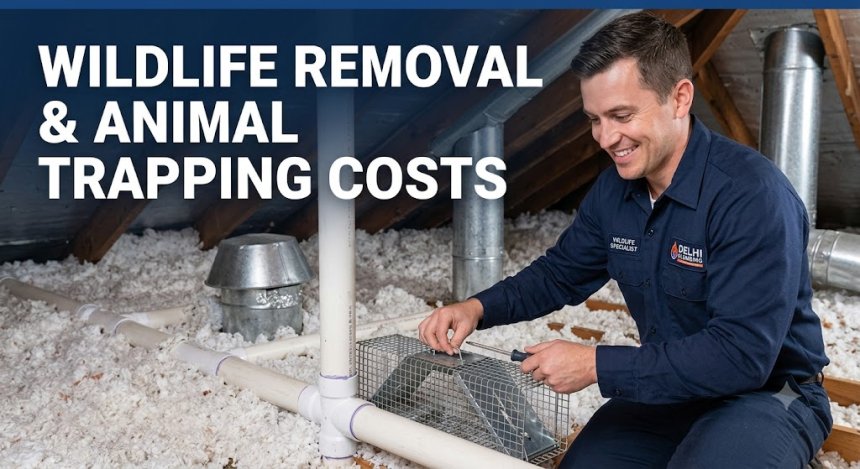
Understanding wildlife removal & animal trapping costs in Orlando requires evaluating target species, accessibility, and structural damage:
| Service Category | Average Orlando Cost Range | Key Pricing Variables |
| Comprehensive Inspection & Diagnostic Fee | $100 – $250 (Often credited toward service) | Roof pitch height, attic accessibility scope, structural footprint. |
| Basic Animal Trapping & Removal (Squirrels/Opossums) | $300 – $600 | Number of traps set, trap checking frequency, species involved. |
| Raccoon or Large Animal Extraction | $400 – $800 | Maternal den complexity, aggressive animal handling, entry location. |
| Bat Exclusion & Colony Removal | $1,500 – $3,500+ | Colony size, roofline complexity, linear feet of custom exclusion netting. |
| Structural Exclusion & Repair Labor | $500 – $2,000+ | Total entry points sealed, metal fabrication needs, roof height. |
| Full Attic Sanitation & Insulation Restoration | $2,000 – $5,000+ | Square footage, insulation vacuum extraction, enzymatic fogging. |
Key Cost Drivers:
-
Initial Diagnostic Fees: Covers preliminary thermal camera sweeps and detailed structural roofline mapping.
-
Accessibility & Height: Multi-story homes with steep roof pitches require specialized ladder systems and safety harness rigs.
-
Species & Maternal Timing: Removing mother animals with dependent young requires manual removal protocols, increasing labor hours.
-
Custom Exclusion Materials: Heavy-gauge metal flashing, steel mesh, and concrete sealing drive long-term material and labor expenses.
-
One-Time Emergency vs. Subscription Protections: Emergency removals carry higher immediate service costs, whereas recurring quarterly pest plans offer discounted exclusion maintenance.
9. Professional Equipment & Diagnostic Arsenal
| Equipment | Practical Application & Purpose |
| FLIR Thermal Imaging Cameras | Pinpoints heat signatures of hidden animal nests and baby litters buried behind drywall or insulation. |
| Digital Inspection Borescopes | Snake-cameras inserted into tight wall voids and soffit junctions to confirm animal species without cutting drywall. |
| Heavy-Duty One-Way Exclusion Doors | Allows animals to exit structural entry points safely while mechanically blocking their return. |
| Positive-Catch Live Traps | Species-specific, humane wire traps mounted directly over primary entry points for precision capture. |
| HEPA Attic Insulation Vacuum Systems | High-powered commercial vacuums designed to extract contaminated insulation, droppings, and debris safely. |
10. Industry Hard Truths & Insider Facts
-
OTC Foggers & Bombs Fail Against Wildlife: Total-release foggers do not affect raccoons, squirrels, or bats; they only contaminate soft goods and drive animals deeper into interior wall spaces.
-
Ultrasonic Plug-In Repellers Are Ineffective: Peer-reviewed scientific studies prove wildlife quickly habituate to ultrasonic frequencies, rendering sound plug-ins completely useless.
-
Trapping Without Structural Exclusion Is a Temporary Fix: Removing an animal without permanently sealing entry points using galvanized steel creates a vacuum that new wildlife fills within days.
-
The Insurance Exclusion Trap: Standard homeowner insurance policies in Florida typically exclude wildlife removal and repair costs, viewing pest intrusions as preventable ongoing home maintenance.
11. Comprehensive FAQ Section
What is the typical timeline from trap setup to complete wildlife removal?
Most trapping and exclusion projects require 3 to 7 days to ensure all animals have exited the structure before entry points are permanently sealed and backed with metal flashing.
Are professional wildlife removal methods humane and safe for families?
Yes. Professional wildlife control relies on live-trapping, one-way exclusion doors, and mechanical exclusion without using lethal toxins inside living spaces, keeping children and pets safe.
How do I visually distinguish winged termites from swarming carpenter ants?
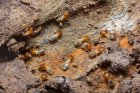
Subterranean termites have straight antennae, a broad waist, and four equal-length wings. Carpenter ants possess elbowed antennae, a narrow pinched waist, and front wings longer than their hind wings.
How should I prepare my home for a professional attic wildlife removal?
Clear access pathways to attic access hatches, move personal belongings away from under ceiling openings, and keep domestic pets secured in separate rooms during inspection and trap setting.
What causes the "flushing out" phenomenon after pest control applications?
Applying non-repellent treatments or mechanical exclusion disrupts established pest pathways, causing hidden individuals to scatter out of harborages before dying or exiting.
Why does standard expanding spray foam fail against rodent teeth?
Rats and squirrels easily chew through cured polyurethane foam. Permanent exclusion requires heavy-gauge galvanized hardware cloth, steel wool, or metal flashing embedded within sealants.
How frequently should an Orlando home undergo professional pest and wildlife inspections?
Due to warm weather and year-round wildlife activity, Orlando homes should receive a thorough structural pest and roofline inspection at least once every 12 months.
What are the primary foundation attractants for subterranean termites on slab homes?
Excessive perimeter soil moisture from misdirected sprinkler heads, mulch touching stucco weep holes, buried scrap lumber, and direct wood-to-soil contact create primary attraction zones.
Need Urgent Wildlife Removal Assistance?
Contact Best Home Pest Control today at +1 (937) 809-8658 to schedule your comprehensive inspection and get an accurate wildlife removal & animal trapping cost estimate in Orlando, FL.