Complete Inspection & Removal Guide | Best Home Pest Control
Learn if homeowners insurance covers termite and pest damage. Get expert IPM inspection tips, DIY boundaries, and prevention strategies. Call 937-809-8658.

Does Homeowners Insurance Cover Termite or Pest Damage
Pest invasions across U.S. residential properties are directly linked to regional weather patterns, foundation structures, and micro-climates. From freeze-thaw cycles in northern states to sub-tropical humidity in the South and flash rains in arid western regions, changing seasonal temperatures create thermal and moisture gradients that drive pests toward human structures.
       SEASONAL ENVIRONMENT & ARCHITECTURAL VULNERABILITY
 ┌──────────────────────┐         ┌────────────────────────┐
 │ Environmental Drives │         │ Architectural Triggers │
 ├──────────────────────┤         ├────────────────────────┤
 │ Frost / Winter Freezes ├────────►│ Unsealed Utility Chases│
 │ Summer Humidity      ├────────►│ Siding-to-Grade Contact│
 │ Heavy Rain / Thaws   ├────────►│ Foundation Settling    │
 └──────────────────────┘         └────────────────────────┘
                                               │
                                               ▼
                                  ┌────────────────────────┐
                                  │ Pest Entry & Infest    │
                                  └────────────────────────┘
Historical and modern residential construction features create primary pathways for infestation:
-
Crawlspaces and Basement Foundations: Moisture migration through porous concrete, fieldstone, or cinder block foundations creates ideal high-humidity habitats for subterranean termites (Reticulitermes spp.), silverfish, and American cockroaches (Periplaneta americana).
-
Unsealed Utility Chases: Gaps surrounding HVAC conduit lines, gas pipes, and plumbing penetrations allow Norway rats (Rattus norvegicus) and roof rats (Rattus rattus) to bypass exterior envelope defenses.
-
Siding-to-Grade Contact: Wood siding, stucco, or EIFS extending below soil lines provides hidden transit routes for wood-destroying organisms (WDO) directly past visual inspection zones.
-
Mature Tree Canopies: Overhanging limbs act as structural bridges for carpenter ants (Camponotus spp.), squirrels, and roof rats to access roof soffits, fascia boards, and attic vents.
3. Seasonal Pest Prevention Framework
                    SEASONAL PEST CONTROL TIMELINE

   SPRING / SUMMER                        FALL / WINTER
  ┌─────────────────────────┐            ┌─────────────────────────┐
  │ • 18–24" Clear Zone     │            │ • Seal Envelope (<1/4") │
  │ • Fix Downspout Grades  │            │ • Check Insulation      │
  │ • Install Door Sweeps   │            │ • Off-Ground Firewood   │
  │ • Check Window Screens  │            │ • Install Copper Mesh   │
  └────────────┬────────────┘            └────────────┬────────────┘
               │                                      │
               └──────────────────┬───────────────────┘
                                  │
                                  ▼
                     ┌─────────────────────────┐
                     │   YEAR-ROUND HABITS     │
                     ├─────────────────────────┤
                     │ • Sealed Food Storage   │
                     │ • Relative Humidity <50%│
                     │ • No OTC Aerosol Bombs  │
                     └─────────────────────────┘
Fall/Winter Protocols
-
Exterior Envelope Sealing: Inspect the foundation perimeter and seal openings larger than 1/4 inch ($6.35\text{ mm}$) using $100\%$ silicone sealant, expanding polyurethane foam reinforced with steel wool, or heavy-gauge copper mesh.
-
Attic and Crawlspace Inspection: Replace damaged attic vent screening with $1/8\text{-inch}$ galvanized hardware cloth. Verify that fiberglass batt or blown-in cellulose insulation remains dry and uncompressed by rodent nesting activity.
-
Firewood Management: Store firewood at least $20\text{ feet}$ away from structural walls and elevated at least $6\text{ inches}$ off the ground to eliminate overwintering harborage for wood-boring beetles, termites, and rodents.
-
Weep Hole Protection: Insert retrofitted plastic or stainless-steel weep hole covers in brick veneer walls to block entry while preserving wall cavity drainage and ventilation.
Spring/Summer Protocols
-
Vegetation Clearances: Maintain a strict $18\text{ to }24\text{-inch}$ cleared pea-gravel or river-rock border between landscaping mulch, shrubbery foliage, and exterior foundation walls.
-
Drainage and Downspout Grading: Extend downspout splash blocks a minimum of $4\text{ to }6\text{ feet}$ away from the foundation. Ensure grade soil slopes away from the structure at a rate of $6\text{ inches}$ over the first $10\text{ feet}$.
-
Moisture Elimination: Repair leaking hose bibbs, air conditioning condensate drain lines, and exterior irrigation heads that maintain standing water or saturated soil zones.
-
Door and Window Maintenance: Install heavy-duty neoprene door sweeps on all exterior egress doors. Inspect and re-screen operable windows using $18\times16$ mesh count screening.
Year-Round Interior Habits
-
Food Storage Protocols: Store open food products, pet food, and pantry items in airtight glass or heavy-duty polyethylene containers. Clean kitchen counter surfaces and sweep sub-appliance floor spaces daily.
-
Relative Humidity Targets: Maintain indoor and basement relative humidity levels below $50\%$ using commercial-grade dehumidifiers to disrupt habitat conditions for dust mites, booklice, subterranean termites, and silverfish.
-
Avoid Aerosol Misuse: Avoid over-the-counter total release foggers or pyrethroid aerosol sprays, which split insect colonies and drive pests deeper into wall voids through repellent scatter effects.
4. Emergency Dispatch Matrix
| Emergency Scenario | Primary Structural & Health Risks | Immediate Action Required |
| Active Rodents in Living / Food-Prep Zones | Electrical fire hazard from wire gnawing; contamination via Salmonella, Leptospirosis, and Hantavirus. | Isolate food stores, eliminate pet food bowls, close internal doors, and call Best Home Pest Control at 937-809-8658. |
| Stinging Insects inside Wall Voids / Attics | Anaphylactic shock risk; structural drywall collapse due to moisture buildup from large nest structures (Vespula spp.). | Do not block exterior exit holes. Seal interior room access, vacate the immediate zone, and contact emergency extermination. |
| Interior Wildlife Encounters (Raccoons, Bats, Opossums) | Rabies virus exposure, Histoplasmosis from guano accumulation, severe physical bite hazards, structural insulation destruction. | Evacuate the room, keep pets away, shut interior access doors, and call emergency wildlife control immediately. |
| Severe Bed Bug (Cimex lectularius) Infestations | Severe sleep deprivation, secondary skin infections from scratching, rapid transfer across multi-unit or single-family structures. | Encase mattresses in bug-proof covers, do not move furniture between rooms, isolate laundry, and schedule thermal heat/chemical treatment. |
5. Systematic 5-Step Professional Inspection Workflow
   1. Perimeter & Entry Point Mapping
                  │
                  ▼
   2. Interior Micro-Habitat & Moisture Analysis (Borescopes, Moisture Meters)
                  │
                  ▼
   3. Species Identification & Population Density Staging
                  │
                  ▼
   4. Custom Integrated Pest Management (IPM) Formulation
                  │
                  ▼
   5. Targeted Application, Exclusion Installation & Follow-Up Monitoring
-
Exterior Perimeter & Entry Point Mapping:
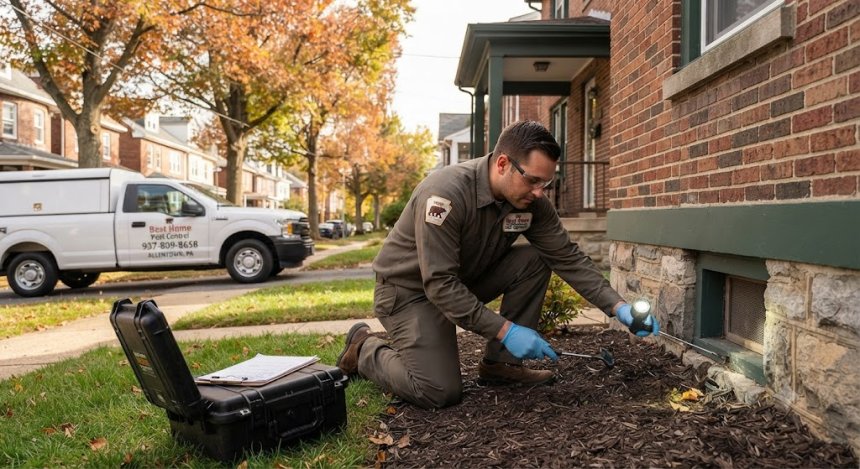
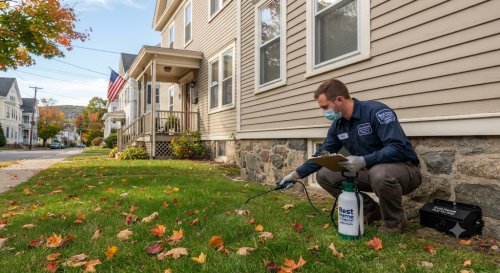
A licensed technician conducts a $360\text{-degree}$ perimeter sweep of the foundation line, examining construction joints, utility penetrations, siding lap seams, structural vents, and roofline interfaces to map all active and potential pest entry paths.
-
Interior Micro-Habitat & Moisture Analysis:
Utilizing pinless moisture meters, FLIR thermal imaging cameras, and digital borescopes, technicians analyze concealed void spaces, crawlspaces, plumbing walls, and basements to identify elevated moisture levels ($>18\%$ wood moisture content) that support WDO and pest harborage.
-
Species Identification & Population Density Staging:
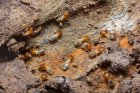
Identification of the exact pest species (e.g., distinguishing Camponotus pennsylvanicus from Reticulitermes flavipes) via morphological examination. Technicians evaluate shed skins, frass, fecal spot patterns, and structural damage to stage the population density accurately.
-
Custom Integrated Pest Management (IPM) Formulation:
Development of a multi-tactic treatment protocol that prioritizes non-chemical physical exclusions, mechanical trapping, environmental moisture controls, and targeted chemical applications tailored to the biology of the target pest.
-
Targeted Application, Exclusion Installation & Follow-Up Monitoring:
Execution of non-repellent transfer chemistry applications (e.g., fipronil, chlorfenapyr), installation of professional exclusion materials (copper mesh, sheet metal flashing, polyurethane sealants), and setup of tamper-resistant monitoring stations to track population knockdown over time.
6. DIY Boundaries vs. Professional Interventions
| Safe DIY Homeowner Tasks | High-Risk / Pro-Only Interventions |
| Replacing worn exterior door sweeps and window screens. | Applying restricted-use termiticides (e.g., trenching and rodding termiticide barriers). |
| Vacuuming visible insect aggregations or isolated dead pests. | Inspecting and treating interior electrical panels, live wall voids, or drop ceilings. |
| Clearing leaf clutter and organic debris away from foundation walls. | Sub-slab chemical injections, structural drilling, or structural fumigation tenting. |
| Storing pantry foods in airtight sealed glass/plastic containers. | Wild animal trapping/removal (raccoons, bats, opossums) involving exposure/rabies risks. |
[!CAUTION]
Pro-Only Trigger Conditions: Drop tools and call Best Home Pest Control (937-809-8658) immediately if you observe:
Daytime sightings of nocturnal pests (e.g., German cockroaches, rats), indicating severe overpopulation.
Persistent scratching, scurrying, or buzzing sounds originating from inside wall voids or ceiling joists.
Visual wood damage accompanied by kick-out holes, frass piles, or shelter mud tubes on foundation walls.
Any occupant experiencing severe allergic reactions, unexplained skin bites, or asthmatic distress linked to pest activity.
7. Warning Signs: Sensory Diagnostics & Risks of Delay
Sensory Indicators
                         SENSORY DIAGNOSTICS
  ┌──────────────────────────────────────────────────────────────┐
  │                                                              │
  │   [AUDITORY]   ──►  Drywall Scratching, Ant Rustling         │
  │                                                              │
  │   [VISUAL]     ──►  Frass Piles, Mud Tubes, Rub Marks, Wings │
  │                                                              │
  │   [OLFACTORY]  ──►  Ammonia Odors, Sweet Mustiness, Rot      │
  │                                                              │
  └──────────────────────────────────────────────────────────────┘
-
Auditory Diagnostics:
-
Drywall Scratching/Scurrying: Gnawing or scampering sounds within wall voids or ceiling cavities during night hours indicate rat or mouse infestations.
-
Ant Rustling: A faint dry rustling sound inside hollow-core doors or insulated wall frames points to parent carpenter ant colonies expanding their gallery networks.
-
Clicking Sounds: Subterranean termite soldiers bang their heads against gallery walls when alarmed, producing a distinct rhythmic clicking sound within structural timbers.
-
-
Visual Diagnostics:
-
Frass and Mud Tubes: Fine, sand-like pellet piles (drywood termite frass) or coarse wood shavings (carpenter ant debris) near baseboards. Mud tubes along foundation walls confirm active subterranean termite transport lanes.
-
Grease Rub Marks and Shed Wings: Dark, oily smudge marks along baseboards point to rodent travel routes. Discarded, equal-length wings near window sills indicate recent termite swarming events.
-
-
Olfactory Diagnostics:
-
Pungent Ammonia Odors: A sharp, pungent ammonia smell inside enclosed spaces (under sinks, attics, pantries) signals concentrated rodent urine deposits.
-
Sweet, Musty Odors: A heavy, sweet, bug-like musty smell throughout sleeping areas suggests an established bed bug infestation (Cimex lectularius).
-
Rotting or Damp Stench: A foul, decaying odor from wall cavities indicates dead pests, damp organic buildup, or decayed structural framing from wood-decay fungi.
-
Cascading Consequences of Inaction
-
Electrical Hazards: Rodents continuously gnaw structural wiring, stripping protective insulation back to copper cores and causing electrical short circuits and structure fires.
-
Structural Failures: Uncontrolled infestations of wood-destroying insects hollow out structural wall studs, floor joists, rim joists, and roof trusses, leading to costly structural repairs.
-
Pathogen Transmission: Airborne dissemination of desiccated rodent droppings and cockroach cast skins introduces allergens, asthma triggers, Salmonella, and Hantavirus into indoor HVAC airstreams.
8. Cost Breakdown & Pricing Variables
Pest control service fees are determined by several operational, structural, and environmental factors:
                  TOTAL SERVICE COST STRUCTURE
 ┌────────────────────────────────────────────────────────────┐
 │  Base Diagnostic Fee                                       │
 ├────────────────────────────────────────────────────────────┤
 │  + Property Size & Access Difficulty (Crawlspaces/Attics)  │
 ├────────────────────────────────────────────────────────────┤
 │  + Treatment Methodology (Heat vs Chemical vs Exclusion)   │
 ├────────────────────────────────────────────────────────────┤
 │  + Service Plan Structure (One-Time vs Recurring Plan)     │
 └────────────────────────────────────────────────────────────┘
-
Initial Diagnostic & Inspection Fees:
Comprehensive structural diagnostic inspections (often credited toward the total treatment agreement if service is performed) establish the baseline infestation parameters, species identification, and damage assessment.
-
Square Footage & Accessibility Difficulties:
Larger structural footprints require greater material volume and labor hours. Tight crawlspaces, low-pitch attics, or complex architectural features increase labor duration and safety equipment requirements.
-
Treatment Methodology Required:
-
Targeted Chemical Applications: Utilizing non-repellent insecticides, liquid barriers, and baiting systems.
-
Thermal Heat Remediation: Deploying high-output structural heaters and circulation fans for bed bug heat treatments.
-
Structural Exclusion Labor: Custom carpentry, flashing installation, concrete drilling, and masonry sealing to block pest entry points physically.
-
-
Service Plan Structure:
-
One-Time Emergency Interventions: Higher upfront costs for immediate population knockdown and targeted exclusion work.
-
Recurring Maintenance Plans (Quarterly/Bi-Monthly): Lower individual visit costs that provide ongoing barrier protection, continuous monitoring, and free retreatment guarantees.
-
9. Professional Equipment & Diagnostic Arsenal
| Equipment / Material Name | Technical Category | Practical Application & Function |
| FLIR Thermal Imaging Camera | Non-Destructive Diagnostic | Detects hidden thermal anomalies in wall voids caused by moisture leaks, termite gallery networks, or rodent nesting clusters. |
| Digital Articulating Borescope | Optical Inspection | Allows high-definition visual inspection inside sealed wall voids, utility chases, and plumbing drop-downs through micro-drilled entry holes. |
| Pinless Moisture Meter | Environmental Measurement | Measures percentage wood moisture content (% WMC) without damaging surfaces, pinpointing micro-habitats susceptible to WDO and decay. |
| Acoustic Listening Devices | Sonic Diagnostic | Amplifies low-frequency acoustic signatures (head-banging soldier termites, rodent gnawing, wood-boring beetle larvae) through solid wood and drywall. |
| Non-Repellent Transfer Chemistries | Chemical Remediation | Active ingredients (e.g., Fipronil, Chlorfenapyr) that pests pass through unnoticed, spreading the active agent back to the central nest via social grooming/trophallaxis. |
10. Industry Hard Truths & Insider Facts
-
Why Over-The-Counter Total-Release Foggers ("Bug Bombs") Fail:
Aerosol bug bombs disperse repellent pyrethroid chemistries that coat open horizontal surfaces without penetrating deep into wall voids, cabinet bases, or baseboard cracks where target pests hide. The repellent nature of these sprays triggers a "scatter effect," driving pests deeper into structural cavities and splitting single colonies into multiple sub-colonies.
-
The Ineffectiveness of Ultrasonic Plug-In Repellers:
Scientific testing shows that high-frequency ultrasonic pest repellers fail to provide pest control. Target pests quickly habituate to ambient sound waves, or simple obstacles like furniture and drywall block the acoustic signals.
-
Chemical Applications Without Physical Exclusion Always Fail:
Applying liquid insecticides without sealing structural entry paths is only a temporary fix. As long as structural openings, moisture sources, and entry gaps remain unsealed, new pest populations will enter once the chemical barrier degrades.
-
The Insurance Trap (Does Homeowners Insurance Cover Termite or Pest Damage?):
[!WARNING]
The Insurance Reality: Standard homeowners insurance policies DO NOT cover termite, insect, or rodent damage. Insurance carriers classify pest damage as "preventable structural maintenance" rather than a sudden, accidental event. Homeowners are financially responsible for structural repairs caused by wood-destroying organisms or pest chewing unless an un-associated covered peril (like a burst pipe) directly caused the infestation. Continuous inspection and maintenance programs remain the only reliable protection against catastrophic repair costs.
11. Comprehensive FAQ Section
Q1: How long after treatment will it take to eliminate the pest colony completely?
Targeted pest control treatments usually achieve initial population knockdown within $24\text{ to }48\text{ hours}$. Total colony elimination varies by species and treatment method:
-
German Cockroaches & Ants: $1\text{ to }3\text{ weeks}$ via baiting and non-repellent transfer agents.
-
Subterranean Termites: $30\text{ to }90\text{ days}$ for complete colony destruction via non-repellent liquid termiticides or chitin synthesis inhibitor baiting systems.
Q2: Are the chemical applications safe for children and household pets?
Yes, when applied according to strict EPA-registered label instructions by a licensed professional. Modern IPM protocols emphasize targeted micro-injections into crack-and-crevice locations, wall voids, and tamper-resistant bait stations inaccessible to children and pets. Homeowners are instructed to keep pets and family members off treated surfaces until liquid products have fully dried (typically $2\text{ to }4\text{ hours}$).
Q3: How do I visually distinguish winged termites from swarming carpenter ants?
                     ANT vs. TERMITE IDENTIFICATION

      CARPENTER ANT                         SUBTERRANEAN TERMITE
   ┌─────────────────┐                       ┌─────────────────┐
   │ Elbowed Antenna │                       │ Straight Antenna│
   ├─────────────────┤                       ├─────────────────┤
   │ Constricted     │                       │ Straight, Broad │
   │ Pinch Waist     │                       │ Waist           │
   ├─────────────────┤                       ├─────────────────┤
   │ Unequal Wings   │                       │ Equal Wings     │
   │ (Front > Back)  │                       │ (Front = Back)  │
   └─────────────────┘                       └─────────────────┘
Visual identification can be made using three distinct physical features:
-
Antennae: Termites possess straight, bead-like antennae; carpenter ants have distinctly elbowed antennae.
-
Waistline: Termites feature a broad, straight waistline; ants have a constricted, pinched waist ("petiole").
-
Wing Architecture: Termite swarmers have two pairs of wings that are equal in size and length, folding flat over the abdomen; carpenter ant swarmers have unequal wing pairs (front wings are distinctly larger than hind wings).
Q4: How should a homeowner prepare their living space prior to professional bed bug or cockroach treatments?
For bed bug remediation, strip all bed linens, pillowcases, and mattress covers, then wash and dry them on high heat ($>120^\circ\text{F}$ or $49^\circ\text{C}$). De-clutter floors, vacuum thoroughly, and pull furniture $12\text{ inches}$ away from perimeter walls. For cockroach treatments, empty under-sink areas, wipe down kitchen counters, clean behind major appliances, and remove all exposed food items.
Q5: Why do I see increased pest activity ("flushing out") immediately following professional treatment?
Non-repellent chemistries, flushing agents, and insect growth regulators (IGRs) irritate target pests and disrupt their nervous systems, forcing them out of concealed harborage voids. This increased activity is a normal sign that the treatment is working as pests pass through applied control barriers. Activity levels typically decline sharply within $7\text{ to }14\text{ days}$.
Q6: Why does expanding spray foam fail to stop persistent rodent intrusions?
Standard polyurethane expanding foam cures into a soft, cellular matrix that rats and mice easily gnaw through. Rodents can chew through foam in seconds. Effective rodent exclusion requires fill materials reinforced with copper mesh, stainless steel wool, heavy-gauge hardware cloth, or specialized rodent-resistant elastomeric sealants.
Q7: How often should residential homes undergo professional pest and termite inspections?
Properties should undergo a complete professional pest and WDO inspection at least once per year. Homes located in high-moisture climate regions, densely wooded environments, or historical structural districts benefit from bi-monthly or quarterly maintenance inspection schedules to identify structural envelope breaches before populations become established.
Q8: What are the primary foundation attractants for subterranean termite swarms?
Subterranean termites are attracted to moisture accumulation around foundations and direct soil-to-wood structural contacts. Key attractants include:
-
Landscaping mulch placed directly against foundation walls.
-
Rotted wooden landscape timbers, tree stumps, and buried construction debris.
-
Leaking hose bibbs, clogged downspouts, and improper soil grading that pools water against concrete walls.
-
Cellulose materials (cardboard boxes, scrap lumber) stored directly on damp crawlspace or basement floors.
Need Professional Structural Protection?
Protect your property from uninsured pest and termite damage. Contact the licensed specialists at Best Home Pest Control today at 937-809-8658 to schedule a full diagnostic inspection and structural IPM evaluation.