How Much Does General Pest Control Cost? | Milwaukee Guide
Discover general pest control costs in Milwaukee. Learn local pest risks, diagnostic steps, DIY limits, and when to call a licensed exterminator.

Introduction
Nothing shatters your peace of mind faster than the sudden realization that unwelcome pests have invaded your home. Whether it is the subtle rustle of mice inside plaster walls on a freezing January night or the unsettling discovery of carpenter ant sawdust near your basement joists, pest infestations pose severe threats to structural integrity, health, and daily comfort. When facing an unexpected infestation, one of the first questions homeowners ask is: How Much Does General Pest Control Cost
Effective pest control milwaukee requires a clear understanding of pest behavior, regional environmental triggers, and proper remediation strategies. Property owners across Milwaukee, Wauwatosa, West Allis, Brookfield, and surrounding neighborhoods frequently confront pest challenges rooted in the region's climate swings and aging structural architecture. Ignoring early indicators allows small infestations to multiply exponentially, leading to compounding repair costs and health hazards. This guide breaks down local pest mechanics, diagnostic methods, financial realities, and preventive frameworks so you can make informed decisions before hiring a professional technician.
Comprehensive Home Pest Prevention Framework
Maintaining a pest-free home requires an ongoing, proactive approach tailored to seasonal conditions. Implementing this structured framework significantly reduces the likelihood of pest entry and reproduction.
Fall/Winter Protocols
-
Seal Exterior Penetrations: Inspect foundation walls, utility entrances, and siding joints. Fill cracks larger than a quarter-inch with polyurethane sealant and copper mesh.
-
Inspect Attic & Crawlspaces: Check insulation for rodent burrowing, droppings, or daylight leaks around soffit vents. Install mesh covers over gable vents.
-
Manage Hose Bibs & Outdoor Lines: Drain exterior spigots and ensure garden hoses are disconnected to prevent sheltered overwintering spots for boxelder bugs and stink bugs near foundation walls.
-
Store Firewood Elevated: Keep stored firewood at least 20 feet away from your home's foundation and elevated off the ground to eliminate sheltered harbors for mice, spiders, and carpenter ants.
Spring/Summer Protocols
-
Maintain Landscape Buffer Clearances: Trim tree branches and shrubbery so they sit at least 18 to 24 inches away from siding and rooflines, cutting off natural pest bridges.
-
Optimize Grade & Drainage: Ensure soil slopes away from your foundation and splash blocks direct downspouts at least 6 feet away to eliminate standing water zones.
-
Inspect Door Sweeps & Window Screens: Replace worn weather stripping and patch torn window screens to block crawling and flying insects during high-activity months.
Year-Round Preventative Habits
-
Eliminate Interior Food Sources: Store grains, pet food, and pantries in airtight glass or thick plastic containers rather than cardboard boxes.
-
Regulate Indoor Humidity: Run dehumidifiers in basements and crawlspaces to keep ambient moisture levels below 50%, making environments inhospitable to silverfish, centipedes, and carpenter ants.
-
Avoid Chemical Misuse: Refrain from overusing off-the-shelf aerosol sprays, which often disperse pest colonies deeper into wall cavities rather than eliminating the nest.
Emergency Protocol: When Immediate Dispatch is Non-Negotiable
While minor insect sightings can be managed during standard operational hours, specific pest scenarios demand immediate 24/7 professional dispatch to protect occupants and structural safety:
| Scenario | Primary Risk Factors |
| Active Rodent Intrusions in Food Prep & Living Areas | Direct health code violations, disease transmission, and electrical fire hazard from gnawed wiring. |
| Stinging Insect Nests Inside Wall Cavities or Living Spaces | Structural wall damage, aggressive stinging threats, and high risk of severe allergic anaphylaxis. |
| Wildlife Encounters (Raccoons, Bats, Opossums) Inside Living Space | Rabies transmission risk, severe structural insulation destruction, and aggressive animal behavior when cornered. |
| Severe Bed Bug Infestations Causing Secondary Skin Infections | Rapid exponential multiplication, severe sleep deprivation, and widespread physical contamination. |
Root Causes: Why Pests Invade Milwaukee Homes
Pest infestations are rarely random; they are driven by environmental pressures and architectural vulnerabilities typical of Midwestern structures.
-
Aging Infrastructure & Masonry Deterioration: Historic Milwaukee homes—especially those built with fieldstone foundations, cream city brick, or aging mortar—develop settling cracks over time. Rodents require an opening no larger than a dime to gain entry.
-
Seasonal Freeze-Thaw Cycles & Ground Shifting: Harsh winters force cold-blooded insects and warm-blooded mammals alike to seek indoor warmth and shelter. Deep ground freezes drive burrowing pests closer to warm basement walls.
-
High Ambient Moisture & Lake Effects: High humidity levels near Lake Michigan create ideal conditions for wood-destroying organisms. Softened, moisture-damaged wood acts as an open invitation for carpenter ant colonies and powderpost beetles.
-
Unsealed Utility Penetrations: Modern updates to plumbing, HVAC, and electrical lines often leave unsealed gaps where pipes penetrate exterior walls, serving as highways for crawling insects and mice.
-
Mature Neighborhood Canopy: Beautiful, mature tree canopies in historic neighborhoods provide direct bridge routes for squirrels, raccoons, and ants to jump onto roofs and enter through soffits or chimney flashing.
Professional Diagnostic & Inspection Workflow
A certified pest control specialist approaches infestations through a systematic, science-based methodology rather than guesswork.
Step 1: Exterior Perimeter Assessment & Entry Point Mapping
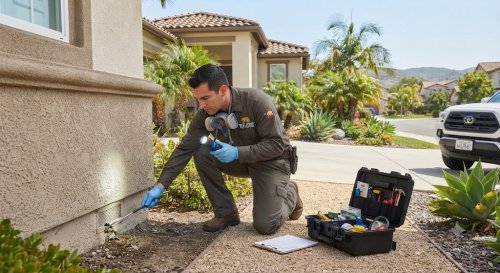
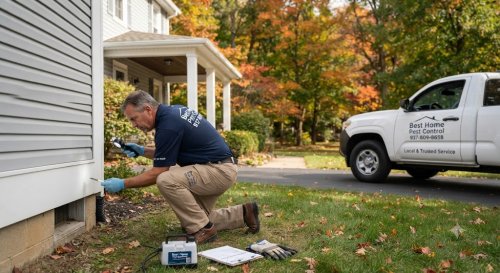
The technician performs a 360-degree inspection of the property exterior, examining foundation lines, soffits, rooflines, window sills, and utility penetrations to map out active and potential entry portals.
Step 2: Interior Micro-Habitat & Moisture Analysis
Inspecting interior hotspots—including basements, attics, crawlspaces, under sinks, and behind major appliances—the technician checks for harborages, droppings, rub marks, and elevated moisture levels using dedicated tools.
Step 3: Species Identification & Population Density Staging
Accurately identifying the exact pest species (e.g., distinguishing pavement ants from carpenter ants, or Norway rats from house mice) is essential for selecting the correct biological targeted treatment.
Step 4: Custom Integrated Pest Management (IPM) Plan & Quote
The technician formulates a targeted plan combining physical exclusion, environmental modifications, and precise product applications, presented with upfront, transparent pricing.
Step 5: Application, Exclusion Implementation, & Follow-Up Verification
After applying targeted interventions and sealing critical access points, the technician schedules follow-up visits to monitor monitoring stations, verify population elimination, and refresh barrier protections.
DIY Reality Check: What You Can Safely Fix vs. When to Step Back
Homeowners can address minor, surface-level issues, but attempting major pest eradication without professional training carries significant risk.
| Safe Homeowner DIY Actions | Dangerous / Pro-Only Interventions |
| Safe placement of covered snap traps for isolated house mice. | Spraying over-the-counter aerosols for active bed bug or yellowjacket nest infestations. |
| Sealing low-level gap openings with silicone caulk & steel wool. | Tackling attic wildlife (raccoons, bats) without rabies vaccines or exclusion permits. |
| Installing door sweeps and mesh covers on exposed foundation vents. | Applying restricted-use termiticides or thermal heat remediation equipment without licensing. |
| Clearing leaf litter, standing water, and firewood piles away from home perimeter. | Drilling concrete slabs for subterranean termite chemical barrier treatments. |
Criteria for Dropping the Tools and Calling a Licensed Pro:
-
Pests are visible during daylight hours: Indicates high population density overcapacity in hidden nests.
-
Nests inside structural walls: Buzzing, scratching, or staining appearing through drywall or ceiling plaster.
-
Presence of wood-destroying insects: Frass (insect poop/sawdust), mud tubes, or shed wings near structural framing.
-
Health or safety risks: Presence of stinging insects near entry doors, animal bites, or severe fecal contamination.
Critical Warning Signs: When Your Home is Sounding the Alarm
Pest intrusions leave clear indicators long before live specimens are seen out in the open. Recognizing early sensory signs prevents widespread property damage.
Sensory Indicators
-
Auditory Clues: Faint scratching, scurrying, or thumping sounds inside wall cavities or ceilings—particularly at night—signal rodent or wildlife activity. A soft rustling or tapping sound behind drywall often indicates large carpenter ant nests.
-
Visual & Structural Cues: Fine, powdery sawdust (frass) under exposed wooden beams, mud tubes climbing foundation walls, small piles of shed wings on window sills, chewed electrical wiring, or unexplained damp patches on walls.
-
Olfactory Cues: A sharp, ammonia-like stench typically signals concentrated rodent urine behind walls. A persistent musty, sweet smell often points to an established bed bug infestation, while rotten pungent odors indicate decaying matter or hidden rodent nests.
Cascading Risks of Delaying Action
Ignoring these warning signs leads to severe consequences:
-
Electrical Fire Hazards: Rodents continuously gnaw on wire insulation to file down their teeth, exposing live wires inside walls.
-
Structural Frame Weakening: Carpenter ants and termites hollow out structural studs, joists, and subfloors, compromising structural load capacities.
-
Health & Allergen Escalation: Pest dander, droppings, and shed skins trigger severe asthma attacks, release airborne pathogens (such as Hantavirus or Salmonella), and contaminate food contact surfaces.
What Is Residential Pest Control? Decoding the Mechanism
Modern residential pest control is not simply "bug spraying"—it is a structured discipline called Integrated Pest Management (IPM). IPM combines biological science, building diagnostics, mechanical exclusion, and targeted treatments to manage pest populations safely and sustainably.
How Integrated Pest Control Works
When functioning correctly, your home operates as a sealed envelope that repels exterior organisms while managing indoor moisture and waste. A professional pest management program restores this barrier through three main pillars:
| 1. Mechanical Exclusion | 2. Habitat Modification | 3. Targeted Remediation |
| Physical blockage of gaps, steel mesh in weep holes, and structural seals. | Eliminating moisture leaks, food sources, and micro-climates that sustain pest life. | Using non-repellent baits, growth regulators, and precision barrier materials specific to species. |
Real-World Midwestern Scenario
Consider a classic 1920s bungalow in West Allis. During a wet autumn, decaying tree roots near the foundation create microscopic soil voids. Subterranean termites follow moisture lines along fieldstone walls and enter structural sill plates. Concurrently, field mice enter through a quarter-inch gap surrounding a gas line entry point.
An untrained attempt using store-bought bug bombs will fail because the fogger cannot penetrate heavy wood joists or foundation voids—it merely leaves chemical residue on living room carpets while driving pests deeper into structural walls. Professional IPM targets the subterranean nest root source while physically blocking exterior access points.
Financial Breakdown: Cost Factors & Investment Realities
Pest control service pricing depends on pest species, infestation severity, property square footage, and structural accessibility. Flat rate pricing varies based on labor rates and specialty equipment requirements.
Primary Variable Cost Inputs
-
Diagnostic & Initial Inspection Fees: Standard service call dispatch and thorough diagnostic evaluations range from $75 to $200 (often credited toward the total treatment cost if service is authorized).
-
Treatment Type & Specialty Equipment: Basic perimeter treatments carry lower costs, whereas advanced heat treatments for bed bugs or specialized structural drilling for termite barrier injection require high-end capital equipment and higher labor inputs.
-
Property Size & Accessibility: Larger homes, complex multi-level structures, or properties with difficult crawlspaces demand more labor hours and product volumes.
-
Exclusion Work & Structural Repair: Custom carpentry, masonry repair, copper mesh installation, and capping entry routes add structural repair costs but provide long-term prevention.
-
One-Time Emergency vs. Recurring Maintenance Subscriptions: One-time intensive knockdowns generally cost more upfront than ongoing quarterly prevention plans, which maintain proactive barrier protection year-round.
Advanced Diagnostics: The Professional Tool Arsenal
Modern pest management relies on technology to locate, identify, and eliminate hidden infestations without destructive wall teardowns.
| Equipment | Practical Application & Purpose |
| FLIR Thermal Imaging Cameras | Detects heat signatures of hidden wildlife or insect nests inside walls and identifies moisture pockets. |
| Digital Borescopes & Inspection Cameras | High-definition snake cameras inserted through micro-holes to inspect wall cavities, drop ceilings, and ductwork. |
| Electronic Moisture Meters | Pinpoints damp framing studs and subfloors that attract carpenter ants, termites, and wood-boring beetles. |
| Rodent Acoustic Listening Devices | Ultrasound sensors that detect gnawing, scratching, and movement behind drywall and insulation layers. |
| Non-Repellent Liquid Transfer Chemistries | Undetectable chemistries that pests carry back to the main colony, achieving complete queen and nest eradication. |
Unique Expert Insights: Hard Truths Homeowners Learn Too Late
-
Total Release "Bug Bombs" Often Worsen Infestations: Over-the-counter foggers trigger a "repellent scatter" effect. They drive pests like bed bugs and German cockroaches deeper into electrical outlets and neighboring wall cavities, making professional eradication far harder.
-
Ultrasonic Plug-In Repellers Are Ineffective: Peer-reviewed scientific studies repeatedly confirm that pests quickly adapt to ultrasonic noise devices, rendering them useless for structural protection.
-
Chemical Clears Without Physical Exclusion Always Fail: Spraying pesticide around a foundation without sealing structural cracks is a temporary patch. Until physical entry paths are sealed, new pests will continue to enter once chemical barriers degrade.
-
Unlicensed "Handyman" Treatments Create Liability Risks: Uncertified individuals applying commercial-grade chemicals often violate federal EPA guidelines, risk poisoning household pets, contaminate food surfaces, and void home insurance coverage.
-
Preventive Plans Cost Far Less Than Emergency Interventions: Investing in recurring seasonal maintenance costs a fraction of a single emergency remediation involving structural timber replacement or severe wildlife cleanup.
Frequently Asked Questions (FAQs)
How long does a typical professional pest treatment take to work?
Initial knockdown usually occurs within 24 to 48 hours. However, complete colony elimination—especially for social insects like ants or termites using bait transfers—takes between 10 and 21 days as products cycle through the full nest population.
Are modern pest control chemicals safe for my children and pets?
Yes, when applied strictly according to EPA labeling by a certified technician. Professional formulations target pest biology and are applied in micro-amounts inside hidden wall voids, bait stations, or precise exterior perimeters out of reach of children and pets.
How can I tell the difference between winged termites and carpenter ants?
Termites have straight antennae, equal-length wings, and broad waists. Carpenter ants have elbowed antennae, front wings longer than hind wings, and narrow pinched waists. Carpenter ants do not eat wood; they hollow it out for nesting space.
Will my homeowner's insurance cover structural repairs caused by pests?
In most standard homeowner policies, termite, rodent, and insect damage is considered preventable maintenance and is excluded from coverage. Proactive prevention is critical for protecting property value.
How often should a home undergo a professional pest inspection in Wisconsin?
An annual comprehensive inspection is recommended for most residential homes. Homes in heavily wooded areas or historic neighborhoods with stone foundations benefit from bi-annual checks in spring and late autumn.
What should I do to prepare my home before a professional bed bug treatment?
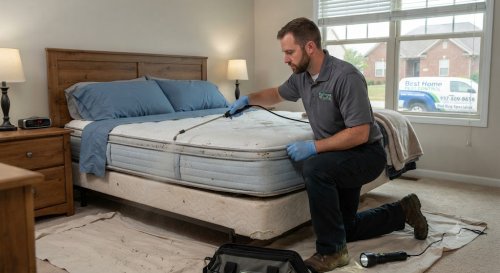
Your technician will provide a detailed prep list. Typical steps include laundering bedding at high heat, vacuuming floors thoroughly, reducing clutter, and clearing perimeter wall space so technicians can access baseboards.
Why do I see an increase in insect activity immediately after treatment?
This is a normal phenomenon known as "flushing out." Active ingredients disrupt pest nervous systems or nests, forcing hidden insects out into the open before they succumb to the treatment.
Can rats chew through spray foam insulation?
Yes. Standard expanding polyurethane spray foam offers virtually zero resistance to rodent teeth. Professional rodent-proofing requires heavy-gauge hardware cloth, copper mesh, or specialized steel-infused caulking compounds.
What attracts subterranean termites to a home foundation?
Soil-to-wood contact, buried construction debris, leaking hose bibs, clogged gutters spilling water near foundation walls, and firewood stored directly against siding create primary termite attraction zones.
Why Local Homeowners Trust Tims Plumbing HVAC & Pest Services
When pest problems threaten your property, partnering with experienced, locally rooted professionals makes all the difference. Our team delivers comprehensive home protection with proven expertise:
-
Fully Licensed, Certified, & Background-Checked Technicians: Every member of our field staff undergoes rigorous state certification, continuous safety training, and background verifications.
-
Science-Based Integrated Pest Management (IPM): We prioritize physical exclusion, environmental corrections, and targeted non-repellent chemistries over indiscriminate chemical spraying.
-
Upfront, Transparent Flat-Rate Pricing: You receive clear written estimates before any work begins—no hidden dispatch fees or surprise surcharges.
-
Advanced Technology & Diagnostic Equipment: We use thermal imaging, digital borescopes, and precision application gear to eliminate infestations at their source.
-
Deep Local Expertise: We understand the unique architectural vulnerabilities and seasonal pest cycles affecting homes across Milwaukee, Wauwatosa, West Allis, Brookfield, and surrounding communities.
-
Customer-First Guarantee: Our services are backed by clear satisfaction commitments to give you complete peace of mind.